
Landscaping
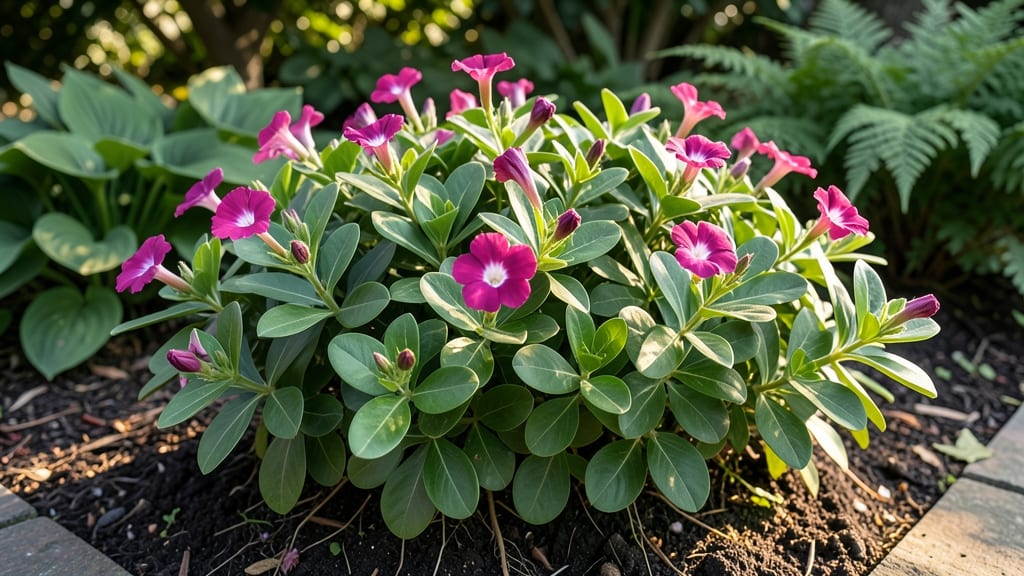
This landscape vinca flower bed turns even the driest corners into vibrant, fuss-free tapestries of color—perfect for gardeners who’d rather sip lemonade than wield a hose. it’s the backbone of my front yard.
The secret lies in its adaptability: whether you want a sun-drenched border or a shady ground cover, vinca delivers vibrant blooms from spring through frost.
Start with the right variety—Vinca minor for shade and Catharanthus for sun—and pair it with companions like lavender, sedum, or ornamental grasses for texture. A 3-inch layer of mulch keeps roots cool and suppresses weeds, while spacing plants 12-18 inches apart ensures they fill in beautifully.
For budget-friendly setups, use cuttings from existing vinca plants instead of buying flats.
By late summer, your bed will be a dense, velvety blanket of flowers, resistant to deer and drought. The dark green foliage contrasts perfectly with purple, white, or pink blooms, and the scent?
Subtly sweet, like a whisper of spring all season long. Maintenance is minimal—just trim back leggy stems in early spring and watch it rebound.
Works in every climate zone, from coastal gardens to desert landscapes, and scales from small window boxes to sprawling borders. Once established, vinca outcompetes weeds and requires less water than grass. Ready to create a bed that stays stunning with almost no effort?
📚 In This Guide
- What you need
- Instructions
- Tips and common mistakes
- Wrapping up and next steps
What you need
- ● Vinca (Periwinkle) Plants: 10–20 plants per 100 sq. ft. (adjust based on spacing—12–18 inches apart for full coverage).
- ● Varieties: Vinca major (larger leaves, great for shade) or Vinca minor (smaller, ideal for sun).
- ● Soil Amendments: 5 lbs. of compost or well-rotted manure per 100 sq. ft. (improves drainage and fertility).
- ○ Optional: Slow-release fertilizer (10-10-10 or 12-12-12, 5 lbs. per 100 sq. ft.) for a nutrient boost.
- ● Mulch: 2–3 inches of pine bark nuggets or shredded hardwood mulch (retains moisture, suppresses weeds).
- ● Tools: Garden shovel or spade
- ● Hand trowel (for planting individual vincas)
- ● Rake (for leveling soil)
- ● Garden hose with soaker nozzle (or watering can)
- ● Measuring tape or string + stakes (for layout)
- ● Edging: Flexible landscape edging or brick/paver borders to define the bed neatly.
- ● Companion Plants: Heuchera (for texture)
- ● Ajuga (spiller plant)
- ● Dwarf boxwood (structural contrast)
- ● Slow-Release Granular Fertilizer: Apply once a year in early spring for vibrant blooms.
- ● Drip Irrigation System: Automates watering (ideal for drought-prone areas).
How to create a thriving vinca flower bed for season-long color
Vinca thrives with minimal fuss—here’s how to establish a lush, drought-tolerant bed that blooms from spring through frost.
🌱 Step 1: Choose the Right Site and Prepare the Soil
Vinca flourishes in full sun to partial shade, with at least 6 hours of direct sunlight daily for optimal blooming. Scout your space for an area with good drainage—vinca roots rot quickly in soggy soil. If your yard has heavy clay, amend the soil with 3 inches of compost mixed into the top 12 inches of soil to improve aeration and moisture retention.
Here’s the thing—vinca tolerates poor soil but performs best when the pH is between 6.0 and 7.0. Test your soil’s pH with a kit, and adjust with lime if it’s too acidic or sulfur if it’s too alkaline. Once the soil is prepped, rake the surface smooth to create a level planting bed—uneven ground leads to water pooling and uneven growth.
🌿 Step 2: Plant Vinca Correctly for Dense Coverage
Dig holes twice as wide as the vinca root ball but only as deep as the container’s base. This prevents burying the crown, which can cause rot. Space plants 12–18 inches apart for a full, mature look—closer spacing encourages faster ground cover but may require thinning later. Gently remove vinca from their containers and tease apart any circling roots to encourage outward growth.
Place each plant in its hole, then backfill with soil, pressing lightly to eliminate air pockets. Water deeply right after planting to settle the soil and help roots establish contact. You’ll see new growth within 7–10 days if moisture and sunlight are right. Avoid fertilizing at planting—vinca thrives in lean soil and overfeeding can reduce blooms.
☀️ Step 3: Water Deeply and Establish a Drought-Resistant Routine
For the first 2–3 weeks, keep the soil consistently moist—about 1 inch of water per week—to help roots spread. After that, vinca’s drought tolerance kicks in. Water once a week during dry spells, but let the top 2 inches of soil dry out between waterings. Overwatering is the fastest way to kill vinca, so resist the urge to keep the bed soggy.
Mulch the bed with 2–3 inches of shredded bark or pine straw to conserve moisture and suppress weeds. Apply mulch 2–3 inches away from plant stems to prevent rot. You’ll notice fewer weeds and less water evaporation once the mulch layer is in place. Vinca’s deep roots will thank you by staying resilient through heatwaves.
✂️ Step 4: Prune and Maintain for Continuous Blooms
Deadhead spent flowers every 2–3 weeks to encourage more blooms and prevent self-seeding. Snip stems just above a set of healthy leaves—this redirects energy into new growth. If your vinca starts to look leggy, give it a light trim in early spring, cutting back one-third of the oldest stems to promote bushier growth. Avoid heavy pruning in fall, as vinca needs foliage to photosynthesize and store energy for winter.
Fertilize once a year in early spring with a balanced, slow-release fertilizer (10-10-10). Apply it 3–4 inches away from the stems and water it in well. Too much nitrogen leads to lush foliage but fewer flowers, so skip heavy feeding. Vinca’s natural hardiness means it rarely needs extra care—just occasional pruning and water during prolonged dry spells.
⏰ Step 5: Overwinter for Next Year’s Vibrant Display
Vinca is evergreen in warm climates but may drop leaves in colder zones. In USDA Zones 8–11, no winter prep is needed—just reduce watering if rainfall is minimal. In Zones 7 and below, apply a 2-inch layer of mulch in late fall to insulate roots from freezing temperatures. Avoid heavy mulch in spring, as it can smother new growth.
Come spring, remove any dead or damaged foliage and refresh the mulch layer. You’ll see fresh green growth within 2–3 weeks as vinca wakes up from dormancy. With proper care, your vinca bed will deliver season-long color with almost no effort—that’s the magic of this tough, versatile ground cover.
Tips & tricks for perfect vinca flower beds
These simple strategies will help you create a vinca bed that thrives year after year with vibrant color and minimal effort.
Sunlight Strategy: While vinca tolerates partial shade, the 6 hours of direct sunlight mentioned in Step 1 is non-negotiable for continuous blooming. If your site gets less light, consider planting vinca near taller shrubs where it can catch reflected sunlight. I've seen vinca in east-facing beds perform exceptionally well because morning sun is less intense than afternoon heat. For maximum impact, position your bed where it gets sunlight from multiple directions.
Soil Preparation Secret: The 3 inches of compost mixed into the top 12 inches of soil isn't just about nutrients—it's about creating the perfect air-to-water ratio vinca craves. If you're working with heavy clay, don't just add compost to the surface; use a broadfork to loosen the soil before mixing. This prevents compaction that can suffocate roots. I've found that adding a handful of perlite to the planting holes helps with drainage in clay soils, which vinca absolutely hates being waterlogged.
Planting Precision: When spacing plants 12-18 inches apart as mentioned in Step 2, think about your long-term vision. Closer spacing (12 inches) creates faster coverage but may require thinning later, while wider spacing (18 inches) gives each plant more room to establish. I recommend starting with 15-inch spacing for a balance—it gives you flexibility to add more plants later if needed. Also, avoid planting vinca in rows; stagger them like bricks in a wall to create a natural, dense look.
Watering Wisdom: The 2-3 week establishment period with consistent moisture is crucial, but here's what nobody tells you: vinca's drought tolerance develops gradually. If you're in a particularly dry climate, extend the initial watering period to 4 weeks to give roots time to establish deeper. After that, the once-weekly watering rule holds true, but always check the top 2 inches of soil first—it should be dry to the touch before watering again. Overwatering is vinca's kryptonite, so resist the urge to water just because it looks dry at the surface.
Pro Tips for Landscape Vinca Flower Bed
- These simple strategies will help you create a vinca bed that thrives year after year with vibrant color and minimal effort.
- Sunlight Strategy: While vinca tolerates partial shade, the 6 hours of direct sunlight mentioned in Step 1 is non-negotiable for continuous blooming.
- Soil Preparation Secret: The 3 inches of compost mixed into the top 12 inches of soil isn't just about nutrients—it's about creating the perfect air-to-water ratio vinca craves.
Frequently asked questions
Got questions about creating a stunning vinca flower bed?
You’re not alone—here are some of the most common concerns and quick answers to help you design with confidence!
How long does it take for vinca to fill in a flower bed?
Vinca spreads quickly! With proper care, you’ll see noticeable coverage in 4–6 weeks, and a fully established bed in 2–3 months. Planting vinca in early spring gives it the best head start for summer blooms. Mulch lightly to retain moisture and speed up growth.
Can vinca survive in full sun or shade?
Vinca thrives in full sun to partial shade (4–6 hours of sunlight daily). While it tolerates shade, vibrant blooms require at least 4 hours of direct sun. In hot climates, afternoon shade helps prevent wilting. Test your bed’s sunlight exposure before planting!
Why are my vinca leaves turning yellow?
Yellowing leaves often signal overwatering, poor drainage, or nutrient deficiency. Check soil moisture—vinca hates soggy roots! Amend heavy clay soil with compost, and fertilize lightly in spring with a balanced 10-10-10 formula. Yellow edges may also indicate burn from harsh sunlight.
What’s a good alternative if vinca doesn’t grow well in my climate?
Try these drought-tolerant, low-maintenance alternatives:
- Creeping thyme – Fragrant, sun-loving, and deer-resistant.
- Ice plant (Delosperma) – Bright flowers, handles heat and poor soil.
- Sedum (Stonecrop) – Succulent-like, thrives in rocky or dry beds.
- Ajuga (Bugleweed) – Purple foliage, shade-tolerant, and spreads fast.
Are vinca plants toxic to pets or kids?
Yes! Vinca (especially Vinca minor and Vinca major) contains alkaloids that can cause vomiting, drooling, or lethargy if ingested. Keep it out of reach of pets and young children. Opt for pet-safe alternatives like lamb’s ear (Stachys byzantina) or sweet alyssum if needed.
Wrapping up and next steps
Creating a stunning landscape vinca flower bed is a rewarding project that brings year-round beauty and low-maintenance charm to your outdoor space. With their vibrant colors, drought-resistant nature, and ability to thrive in various conditions, vinca plants are the perfect choice for adding life to any garden.
Whether you're a seasoned gardener or just starting out, this guide gives you all the tools to design and maintain a breathtaking vinca flower bed that will be the envy of the neighborhood! 🌸
Ready to transform your yard? Start small—pick a sunny spot, gather your supplies, and dive in! Once your vinca bed is planted, enjoy the process of watching it flourish with minimal effort. Happy gardening! 🌿