
Planting
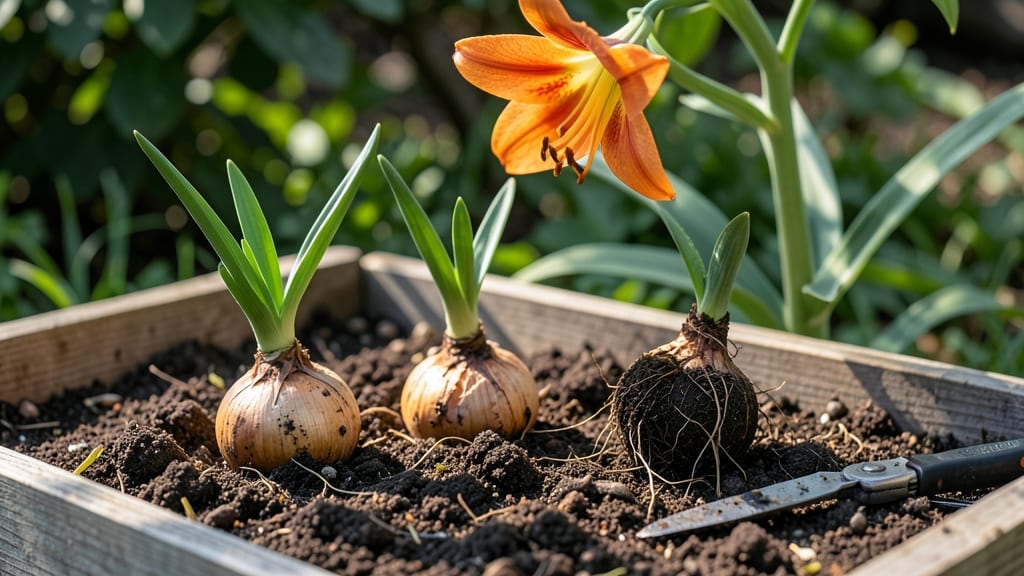
Planting lily flower bulbs transforms any garden spot into a fragrant, summer-long spectacle—if you nail the soil and sunlight balance. 🌸 I’ve learned the hard way that lilies demand well-draining soil and at least six hours of sunlight daily, or they’ll sulk with weak stems and few blooms.
The right mix of gritty soil and patience makes all the difference.
Start with bulbs planted 6–8 inches deep and spaced 12–24 inches apart, depending on the variety. Asiatic lilies thrive in full sun and lean soil, while Oriental types prefer partial shade and richer compost.
Water them deeply after planting, then keep the soil moist but never soggy—lilies hate wet feet.
By midsummer, you’ll be rewarded with towering blooms in every shade from fiery red to creamy white. The fragrance alone—sweet and heady—makes it worth the wait. Just avoid cutting back foliage too soon; those leaves feed next year’s blooms.
Whether you’re growing Asiatics for their bold colors or Orientals for their intoxicating scent, these bulbs deliver reliable blooms for years with minimal fuss. Here’s how to set them up for success from day one.
📚 In This Guide
- What you need
- Instructions
- Tips and common mistakes
- Wrapping up and next steps
What you need
- ● Lily flower bulbs: Choose healthy, firm bulbs (avoid soft or moldy ones). Quantities depend on your garden size—start with 5–10 bulbs for a small patch or 20+ bulbs for a full border.
- ● Well-draining potting soil or garden soil: 10–20 lbs (adjust based on planting area). Mix in compost or aged manure (1–2 lbs) for nutrients.
- ● Planting location: Full sun (6+ hours of sunlight daily) for most lilies (e.g., Asiatic, Oriental).
- ● Partial shade (3–4 hours of sun) for woodland lilies (e.g., Martagon, Candidum).
- ● Garden tools: Trowel or bulb planter
- ● Garden fork or spade (for breaking up soil)
- ● Measuring tape or ruler (to space bulbs 6–12 inches apart)
- ○ Mulch (optional but recommended): 2–3 inches of organic mulch (e.g., straw, shredded bark) to retain moisture and regulate soil temperature.
- ● Slow-release fertilizer: 5–10–10 NPK ratio (1 tbsp per bulb at planting time).
- ● Epsom salt: 1 tbsp dissolved in water (for magnesium boost, especially for Oriental lilies).
- ● Stakes or cages: For tall lilies (e.g., Trumpet or Martagon) to prevent flopping.
- ● Drip irrigation or watering can: For precise moisture control (lilies hate soggy roots!).
- ● Garden journal: To track blooming times, soil conditions, and bulb varieties.
Step-by-step guide to planting and caring for lily flower bulbs
Here’s how to coax those stunning blooms from your bulbs—no green thumb required.
🌱 Step 1: Choose the Right Location and Prepare the Soil
Lilies thrive in full sun to partial shade, with at least 6 hours of sunlight daily. Pick a spot where they’ll get morning sun and afternoon shade if your climate runs hot—wilting is their biggest enemy. Dig up the soil to a depth of 12 inches, breaking up any compacted areas with a fork.
Mix in 2 inches of compost or aged manure to enrich the soil. Lilies love well-draining soil, so if your area stays soggy, add a handful of perlite or coarse sand to improve drainage. The goal is loose, airy soil that won’t suffocate the roots. Test your soil’s moisture by squeezing a handful—it should hold together but not drip water.
🪴 Step 2: Plant Bulbs at the Correct Depth and Spacing
Plant lily bulbs 3 times as deep as their height—so a 4-inch bulb goes 12 inches deep. Push the bulb into the soil with the pointed end facing upward. Space them 12-24 inches apart to give roots room to spread. Crowding leads to weak stems and fewer blooms.
Cover the bulbs with soil, then water deeply to settle everything in place. A light layer of mulch (like shredded bark) helps retain moisture and keeps roots cool. Avoid pressing down too hard—lilies need room to breathe. If you’re planting in containers, use a pot at least 12 inches deep with drainage holes.
☀️ Step 3: Water and Fertilize for Strong Growth
Keep the soil evenly moist but not soggy for the first 4-6 weeks after planting. Water when the top 2 inches of soil feel dry—stick your finger in to check. Overwatering causes rot, while underwatering stunts growth. Once leaves appear, reduce watering slightly but keep the soil damp.
Feed lilies with a balanced, water-soluble fertilizer (like 10-10-10) every 4-6 weeks during the growing season. Stop fertilizing once flower buds form—too much nitrogen now will make leaves grow at the expense of blooms. You’ll see strong, upright foliage as a sign you’re on the right track.
✂️ Step 4: Support Stems and Deadhead for More Blooms
Lily stems can get top-heavy, so install stakes or a cage at planting time to support them. Tie stems loosely with soft twine as they grow—too-tight ties can damage the stem. Once blooms fade, snip off the spent flowers (deadheading) to encourage more blooms and redirect energy to next year’s growth.
Leave the leaves until they turn yellow naturally—this feeds the bulb for next season. Cut back foliage only after it’s fully brown. In colder climates, mulch heavily in fall to protect bulbs from freezing. With proper care, your lilies will reward you with bold, fragrant blooms year after year.
Tips & tricks for perfect lily flower blooms
Here's what I've learned from years of growing these showstopping flowers—simple secrets that make all the difference.
Sunlight Strategy: Those 6 hours of sunlight are non-negotiable, but here's the thing: morning sun is your best friend. If your climate runs hot, afternoon shade prevents wilting while still giving you the light lilies crave. I've seen dramatic differences just by moving plants to east-facing beds in summer—less stress, more blooms.
Depth Matters: Planting bulbs 3 times as deep as their height (like that 4-inch bulb going 12 inches down) might seem extreme, but it's about protecting the bulb from temperature swings. I once planted mine too shallow in a windy spot, and they struggled—now I always use a garden trowel to verify depth with the bulb's top just below the soil line.
Watering Wisdom: The first 4-6 weeks are critical for root establishment, but don't drown them. I test soil moisture by squeezing a handful—it should crumble like damp sandpaper, not squeeze out water. Overwatering is the #1 reason I've seen lily bulbs rot before they even bloom. Once leaves appear, I reduce to just keeping the top 2 inches moist.
Fertilizer Timing: That 4-6 week feeding schedule works wonders, but here's the catch: stop when buds form. I learned this the hard way when my lilies grew leafy monsters instead of flowers. The key is watching for those tight buds—when you see them, it's time to pause the fertilizer. Too much nitrogen at this stage will send energy to leaves instead of blooms.
Pro Tips for Lily Flower Bulbs
- Here's what I've learned from years of growing these showstopping flowers—simple secrets that make all the difference.
- Sunlight Strategy: Those 6 hours of sunlight are non-negotiable, but here's the thing: morning sun is your best friend.
- Depth Matters: Planting bulbs 3 times as deep as their height (like that 4-inch bulb going 12 inches down) might seem extreme, but it's about protecting the bulb from temperature swings.
Frequently asked questions
Got questions about growing lily flower bulbs? You’re not alone! Here are some of the most common queries—plus straightforward answers to help you cultivate stunning blooms with confidence.
When is the best time to plant lily flower bulbs?
For hardy lilies (like Asiatic or Oriental hybrids), plant bulbs in early fall (6–8 weeks before the ground freezes). Tender lilies (such as Stargazer or Casa Blanca) thrive when planted in late spring or early summer after the last frost. Choose a time when soil temps are consistently above 60°F (15°C) for best root establishment.
Can lily bulbs survive winter in cold climates?
Most lily bulbs are hardy to USDA Zones 3–9, but mulching (with straw or leaves) adds extra protection. Tender varieties (like Trumpet Lilies) may need winter mulch or container growing in colder regions. If your area dips below 10°F (-12°C), dig up bulbs after foliage dies back and store them in dry peat moss until spring.
How often should I divide and replant lily bulbs?
Divide lily bulbs every 3–4 years in late summer or early fall to prevent overcrowding and boost flower size. Separate bulbs gently—never cut them—and replant the largest, healthiest ones. Smaller offsets can be potted for future planting. Pro tip: Wear gloves—lily bulbs can irritate skin!
Why aren’t my lily bulbs blooming?
Bloom failures often stem from overcrowding, poor sunlight (they need 6+ hours of sun daily), or nutrient deficiencies. Feed bulbs with a balanced fertilizer (10-10-10) in spring, and ensure they’re planted at the right depth (6–8 inches deep, with the neck slightly above soil). Patience is key—some lilies take 2–3 years to flower after planting.
Are there low-maintenance lily bulb alternatives?
Yes! Daylilies (Hemerocallis) and Daffodils (Narcissus) are bulb-like perennials with minimal care and longer bloom times. For true lilies, Asiatic hybrids are the easiest—they thrive in partial shade, resist deer, and rebloom yearly with proper care. Bonus: Deadhead spent blooms to encourage more flowers!
Wrapping up and next steps
Growing lily flower bulbs is a rewarding journey that brings vibrant blooms and natural beauty to your garden year after year! 🌸 With the right soil, sunlight, and care, you’ll unlock their full potential—whether you’re a beginner or a seasoned gardener.
Now that you’re armed with the secrets to success, it’s time to dig in, plant, and watch your garden transform.
Ready to take the next step? Pick your favorite lily variety, gather your supplies, and start planting today—your future garden will thank you! 🌱