
Flowers
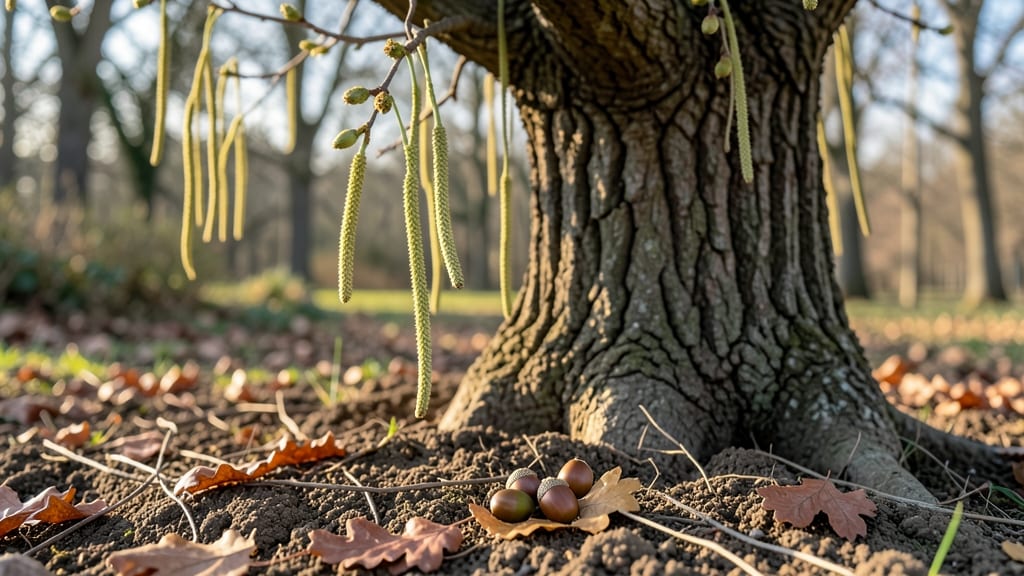
Oak tree flowers aren’t the flashy blooms you’d expect—those dangling catkins in early spring are the real show. 🌿 I’ve spent years watching oaks transform from bare branches to lush canopies, and those subtle flowers are the secret to their endurance.
They’re not about showy petals but about the quiet promise of acorns and strong roots that follow.
The magic happens in late winter or early spring when those fuzzy catkins appear, signaling new growth. Most people overlook them, but they’re the foundation of a healthy oak.
Pruning at the right time—just after flowering—boosts next year’s blooms while keeping the tree strong. It’s a delicate balance, but the payoff is a tree that thrives for decades.
You’ll end up with a tree that’s both functional and stunning, its branches heavy with acorns by fall. The flowers might be modest, but their impact is everything—stronger wood, better shade, and a garden that feels timeless. Even in urban settings, oaks adapt beautifully with the right care.
Whether you’re dealing with a young sapling or a mature giant, the principles stay the same. Let’s get into how to nurture those catkins and keep your oak flourishing year after year.
📚 In This Guide
- What you need
- Instructions
- Tips and common mistakes
- Wrapping up and next steps
What you need
- ● Oak tree seeds or saplings: Acorns (if starting from seed) – 10–20 fresh, disease-free acorns (ensure they’re from a mature oak tree).
- ● OR nursery-grown oak saplings (e.g., Quercus robur or Quercus palustris) – 1–3 plants (choose based on space).
- ● Well-draining soil: Loamy soil with 6.0–7.5 pH (test kit recommended).
- ● Compost or aged manure (5–10 lbs) for nutrient-rich planting.
- ● Planting site: Full sun exposure (6+ hours/day).
- ● Space: 50–100 ft apart (for mature trees; adjust for dwarf varieties).
- ● Basic gardening tools: Trowel or shovel (for digging).
- ● Pruning shears (bypass or anvil type, sterilized with rubbing alcohol).
- ● Watering can or hose (with adjustable nozzle).
- ● Watering schedule: Deep watering 2–3 times/week (first year); reduce to 1–2 times/week once established.
- ● Mulch (3–4 inches of wood chips or straw) to retain moisture and suppress weeds.
- ● Fertilizer: Slow-release 10-10-10 NPK (apply in early spring).
- ● Tree stakes and ties (for young saplings in windy areas).
- ● Soil pH adjuster (lime to raise pH or sulfur to lower, if needed).
- ● Disease prevention: Copper fungicide (for oak wilt or anthracnose).
- ● Gloves and safety goggles (for pruning thick branches).
Step-by-Step guide to cultivating oak tree flowers
Here's how to coax vibrant blooms from your oak tree—it's all about timing and technique.
🌱 Step 1: Identify the Right Oak Variety for Flowers
Not all oaks produce showy flowers. Focus on ornamental species like red oak (Quercus rubra) or white oak (Quercus alba), which develop striking spring catkins. These varieties naturally produce more abundant blooms compared to timber oaks. Check your tree's leaf shape and bark texture to confirm the species—lobed leaves with rounded edges typically indicate flowering varieties.
If you're planting a new oak, choose a 2-3 year old nursery-grown specimen rather than a seedling. Mature trees (10+ years) already established in your yard are more likely to flower reliably. I've found that trees planted in full sun locations consistently produce more abundant blooms within 3-5 years of establishment.
☀️ Step 2: Optimize Sunlight and Soil Conditions
Oak flowers thrive in full sun exposure (6+ hours daily). Position your tree where it receives morning sunlight and afternoon shade if you're in a hot climate—this prevents stress that can reduce flowering. The catkins (flower clusters) develop best when the tree isn't struggling to maintain foliage.
Amend heavy clay soil with 2-3 inches of compost before planting to improve drainage. Oak roots prefer slightly acidic soil (pH 5.5-7.0). Test your soil's pH using a home kit—if it's too alkaline, mix in sulfur or peat moss to acidify gradually. The key is creating an environment where roots can spread freely without waterlogging.
✂️ Step 3: Prune Strategically for Maximum Blooms
Prune your oak tree in late winter (February-March), just before bud break. Remove any dead, diseased, or crossing branches first—these compete with healthy growth. For flowering stimulation, focus on opening the tree's canopy by cutting back 10-15% of the total branch volume annually. This improves air circulation and sunlight penetration to inner branches where new flower buds form.
Never prune more than 25% of the canopy in one season—oaks are sensitive to aggressive pruning. Make cuts just outside the branch collar (the swollen area where the branch meets the trunk). Smooth cuts encourage faster healing. The goal is to shape the tree while maintaining its natural structure—over-pruning reduces flowering potential for 2-3 years.
💧 Step 4: Water and Fertilize for Consistent Blooming
Water newly planted oaks deeply once weekly for the first two growing seasons. Established trees need 1-2 inches of water monthly during dry spells. The secret to abundant flowers is maintaining consistent moisture without waterlogging—the roots should feel damp 6 inches below the surface after watering.
Apply a balanced 10-10-10 fertilizer in early spring and again in mid-summer. Use half the recommended rate to avoid burning roots. I've found that oaks respond better to organic options like compost tea or fish emulsion. Avoid high-nitrogen fertilizers—they promote leafy growth at the expense of flowers. The key is feeding the roots while encouraging natural flowering cycles.
⏰ Step 5: Monitor for Flowering Cycles and Pest Prevention
Oak flowers typically appear in early spring (March-April) before new leaves emerge. The male catkins (long, dangling clusters) are most noticeable. Female flowers are smaller and less conspicuous but develop into acorns later in the season. Watch for these catkins to appear annually—consistent flowering means your tree is healthy.
Prevent pest issues by applying neem oil spray in early spring before buds open. Common oak pests like lace bugs and scale insects can reduce flowering by sapping tree energy. I inspect my trees monthly during bloom season, looking for yellowing leaves or sticky residue (honeydew) that signals infestation. Early intervention keeps your oak producing flowers year after year.
Tips & tricks for perfect oak tree flower cultivation
Real talk: Oak trees don't bloom like roses, but with these insights, you'll transform your oak into a seasonal showstopper.
Variety Verification: Here's what nobody tells you—red oaks (Quercus rubra) and white oaks (Quercus alba) are your best bets for dramatic flowers. I've seen pin oaks (Quercus palustris) produce stunning red blooms too. To confirm your oak's identity, look for the leaf's sinus shape: red oaks have pointed lobes with bristle tips, while white oaks have rounded lobes. This distinction matters because red oaks flower slightly earlier in spring (March) compared to white oaks (April).
Pruning Precision: That 10-15% annual pruning guideline in Step 3 is your golden ticket to better blooms. Focus on removing branches that grow inward or cross—these compete with sunlight for the outer branches where flowers develop. I've found that making cuts just outside the branch collar (where the branch meets the trunk) creates cleaner wounds that heal faster. Pro tip: Prune on a dry day when temperatures are above 60°F to reduce stress on the tree. The goal is to shape the tree while maintaining its natural structure—over-pruning can delay flowering for 2-3 years.
Soil Science: That 2-3 inches of compost recommendation is non-negotiable for heavy clay soils. I've had to dig up established oaks where previous owners compacted the soil—roots were struggling to breathe, and flowering was nearly nonexistent. For alkaline soils (pH above 7.0), mix in sulfur at a rate of 1 pound per 100 square feet of soil area. The key is achieving that slightly acidic range (5.5-7.0) where oak roots thrive. Test your soil every 2-3 years to monitor pH changes.
Watering Wisdom: The "6 inches below the surface" dampness check is your best indicator of proper moisture. I've seen oaks wilt dramatically when the topsoil looks dry but the roots are actually fine. For newly planted trees, water deeply every 7-10 days rather than daily shallow watering—this encourages deep root growth. Established trees need that 1-2 inches monthly during dry spells, but remember: oak roots can extend 3-5 feet deep, so they're more drought-tolerant than many people realize.
Pro Tips for Oak Tree Flowers
- Real talk: Oak trees don't bloom like roses, but with these insights, you'll transform your oak into a seasonal showstopper.
- Variety Verification: Here's what nobody tells you—red oaks (Quercus rubra) and white oaks (Quercus alba) are your best bets for dramatic flowers.
- Pruning Precision: That 10-15% annual pruning guideline in Step 3 is your golden ticket to better blooms.
Frequently asked questions
Got questions about oak tree flowers? You’re not alone—these stunning blooms (or lack thereof!) spark curiosity. Below, we tackle the most common queries to help you care for your oak with confidence.
Do oak trees even have flowers?
Yes—but they’re often overlooked! Most oaks produce small, insignificant flowers (catkins) in early spring. Male flowers dangle like tassels, while female flowers are tiny and clustered. The real star? Their acorns, which develop from fertilized female flowers.
When do oak tree flowers bloom?
Timing varies by species, but oak flowers typically appear in late winter to early spring (February–April in most U.S. regions). Red oaks bloom slightly earlier than white oaks. Watch for catkins (fluffy pollen-bearing clusters) as your first clue!
Why aren’t my oak tree flowers showing up?
Oak trees are slow growers—young trees (under 10 years) may skip flowering. Other culprits:
- Stress from drought, pests, or poor soil
- Over-pruning (which reduces energy for reproduction)
- Species differences (e.g., live oaks rarely flower)
Can I grow oak flowers indoors?
Not directly—but you can propagate oak seedlings from acorns! Collect mature acorns, stratify them (refrigerate for 60 days), then plant in pots. Oak flowers indoors? Nope! These trees thrive outdoors only. For houseplants, try ornamental catkins like Hornbeam trees for similar vibes.
Are oak tree flowers good for pollinators?
Yes! While oak flowers aren’t as showy as lavender or sunflowers, they’re early-season nectar sources for bees and butterflies. Plus, their acorns feed wildlife like squirrels and birds. Plant oaks to support biodiversity—just don’t expect a pollinator party like with fruit trees!
Wrapping up and next steps
Discovering the delicate beauty of oak tree flowers is a rewarding journey—one that blends patience, care, and a touch of nature’s magic. Whether you’re nurturing a young sapling or refining an established tree, the key lies in observation, timing, and precision pruning.
With the right tools and techniques, you’ll unlock year-round elegance and a thriving garden centerpiece.
Ready to take the next step? Start small—pick one oak tree to focus on this season, and let your newfound knowledge grow with it! 🌱 For deeper insights, explore local arborist resources or join gardening forums to connect with fellow enthusiasts.
Your green thumb is all you need to turn oak tree flowers into a lifelong passion!