
Planting
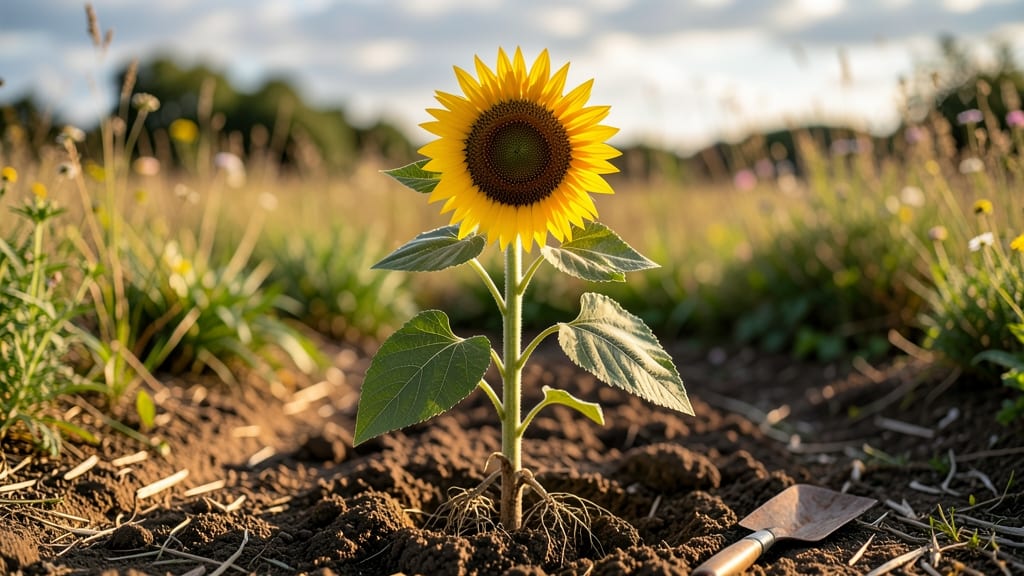
The secret to sunflower plant roots that anchor towering stems lies in the soil—not the seeds themselves. I learned this after watching my first crop flop over in a breeze, their roots barely reaching deeper than my shovel.
Sunflowers aren’t just about height; they’re about stability, and that starts with how you treat their underground foundation.
Most gardeners dig too shallow, assuming sunflowers will find their way. But here’s the thing—sunflowers need 12-18 inches of loose, fertile soil to send roots plunging deep, where they can access water and nutrients.
The deeper the roots, the stronger the stem, and the taller the bloom. Think of it like building a skyscraper: the foundation determines how high it can go.
When you get it right, you’ll see stems that stay straight and sturdy, even in windy conditions. The roots will spread like a network of cables, pulling moisture from the earth while the plant grows 6-12 feet tall without toppling.
No more leaning, no more broken stems—just sunflowers that reach for the sky with confidence.
This works for both garden plots and containers, though container roots need extra care. The key is preparing the soil before planting, not after. Let’s break down how to give those roots the perfect start so your sunflowers grow like they’re in a botanical garden, not a backyard.
📚 In This Guide
- What you need
- Instructions
- Tips and common mistakes
- Wrapping up and next steps
What you need
- ● Sunflower seeds: Choose a variety suited to your climate (e.g., Helianthus annuus). Aim for 10–20 seeds depending on your planting space.
- ● Well-draining potting soil or garden soil: 5–10 gallons (or enough to fill your planting area to a depth of 12–18 inches). Mix in compost or aged manure (1–2 cups per planting hole) for nutrients.
- ○ Planting containers (optional for pots): 5–10 gallon pots with drainage holes if growing indoors or in limited space. Use 1–2 pots per seedling for better root development.
- ● Watering can or hose with a gentle spray nozzle: Ensures deep but controlled watering (avoid overwhelming seedlings).
- ● Fertilizer: A balanced, slow-release fertilizer (e.g., 10-10-10) or organic options like fish emulsion. Use 1 tablespoon per planting hole at planting time.
- ● Stakes or supports (for taller varieties): 3–4 ft bamboo stakes or tomato cages per plant to prevent toppling as roots strengthen.
- ● Garden trowel or hand shovel: For digging planting holes 1–2 inches deep and 1–2 inches wide (sunflower seeds are tiny!).
- ● Measuring tape or ruler: To ensure proper spacing (6–12 inches apart for dwarf varieties, 18–24 inches for giants).
- ● Pruners or scissors: For trimming dead foliage or adjusting stakes as plants grow.
- ○ Gloves (optional but recommended): Protects hands from soil, thorns (on some varieties), and blisters.
- ● Mulch: Straw or wood chips to retain moisture and regulate soil temperature.
- ● Root stimulator: A mycorrhizal inoculant or seaweed extract to boost root growth.
- ● Soil moisture meter: Ensures roots stay hydrated without overwatering.
- ● Sunflower companion plants: Marigolds or beans to deter pests and improve soil health.
How to cultivate sunflower roots for maximum stem strength
Strong roots mean towering sunflowers—here’s how to give them the deep, sturdy foundation they crave.
Loosen Soil to a Depth of 18 Inches
Sunflowers need 18 inches of loose soil to send roots deep for stability. Use a broadfork or tiller to break up compacted layers without disturbing the surface too much. The goal is to create a fluffy, aerated zone where roots can penetrate easily. If your soil is heavy clay, mix in 2-3 inches of compost to improve drainage and root penetration.
Work the soil when it’s damp but not soggy—this prevents clumping and makes it easier to create the ideal root environment. Think of it like fluffing a pillow: you want the soil to be soft enough for roots to push through but still hold moisture. Test your progress by pressing your finger into the soil—it should give slightly but not feel like wet sand.
Plant Seeds at the Correct Depth and Spacing
Sunflower seeds should go 1-2 inches deep, depending on soil moisture. In dry conditions, plant them 1 inch deep so they don’t dry out before germinating. Space seeds 6 inches apart in rows 2-3 feet apart—this gives roots room to spread without competing for nutrients. Crowding leads to weak stems and shallow root systems, which is the last thing you want for a sunflower.
Press the soil gently around each seed to ensure good seed-to-soil contact. This small step prevents air pockets that could delay germination. Water lightly after planting, but avoid soaking the soil—you want it moist but not waterlogged. Once seedlings emerge, thin to the strongest 4-6 plants per row to avoid root competition.
Water Deeply and Infrequently to Encourage Root Growth
Sunflowers thrive on deep, infrequent watering—this trains roots to grow downward in search of moisture. Water once a week with 1-2 gallons per plant, soaking the soil to 12-18 inches deep. You’ll know you’ve watered enough when water runs out the drainage holes if potted, or when the top 6 inches of soil feel damp to the touch.
Shallow watering leads to weak, surface roots that can’t support tall stems. If you notice leaves wilting during the day but perking up at night, your watering isn’t deep enough. Mulch around the base with 2-3 inches of straw or wood chips to retain moisture and protect roots from temperature swings. This simple layer also suppresses weeds, which compete for water and nutrients.
Monitor Soil Compaction and Adjust as Needed
As sunflowers grow, their weight can compact the soil around their roots. If stems start leaning or roots look restricted, gently loosen the soil around the base with your hands or a small hand fork. Focus on the outer 6 inches of the root zone—this relieves pressure without damaging the main taproot. Avoid disturbing the central root mass, as this can shock the plant.
Watch for signs of root stress: yellowing lower leaves, stunted growth, or stems that bend under their own weight. These are clear signals that roots aren’t anchoring properly. If you’re growing in containers, choose pots at least 12 inches deep and 18 inches in diameter—shallow pots restrict root growth and lead to top-heavy plants that topple over.
Fertilize Strategically to Support Root Development
Sunflowers don’t need heavy feeding, but a balanced, low-nitrogen fertilizer applied at planting and again when plants reach 12 inches tall encourages strong root systems. Use a 5-10-10 or 10-10-10 formula at half strength to avoid burning roots. Over-fertilizing with nitrogen produces lush foliage at the expense of root depth, which weakens the stem.
Instead of frequent small doses, focus on two key applications: one at planting and another when the plant is halfway to maturity. Water thoroughly after each application to move nutrients into the root zone. If your soil is poor, a side dressing of compost or worm castings in the root zone provides slow-release nutrients without risking over-fertilization.
Tips & tricks for sunflower plant roots
Here's what nobody tells you about giving sunflowers the deep foundation they need to stand tall.
Soil Preparation Secret: The 18-inch soil depth isn't just about loosening—it's about creating a continuous pathway for roots. After using your broadfork, run your fingers through the loosened soil. You should be able to push them down easily without resistance. If you hit compacted layers, take your time to break them up completely. I've seen sunflowers with roots that hit a hardpan at 12 inches and simply stop growing downward—resulting in weak stems that can't support the plant's weight.
Planting Depth Insight: That 1-2 inch planting depth range is more important than you might think. In dry climates, planting at the shallower 1-inch depth prevents seeds from drying out before germination. But here's the catch: if your soil stays consistently moist, you can plant at the deeper 2-inch mark. The deeper planting encourages roots to grow downward from the start, which is exactly what we want for strong stems. Just remember—this only works if your soil stays moist during germination.
Watering Technique: The once-weekly watering schedule is perfect, but the real magic happens in how you do it. Use a garden hose with a gentle spray nozzle or a watering can with a rose attachment to direct water slowly to the base of the plant. This encourages water to penetrate deeply rather than running off the surface. I've seen gardeners watering from above, which creates a crust on the soil that prevents proper moisture absorption. Aim for that 12-18 inch penetration—you'll know you've succeeded when water appears at the drainage holes if you're in containers, or when you can feel moisture at that depth with your fingers.
Container Considerations: If you're growing in pots, those 12-inch depth and 18-inch diameter measurements are non-negotiable. I've tried growing sunflowers in smaller containers and always ended up with weak stems that couldn't support the plant's weight. The key is to give roots plenty of room to spread outward while also allowing them to grow deep. Choose containers with drainage holes at the bottom—this prevents waterlogging, which can rot roots. And here's a pro move: place your containers on saucers to catch any excess water that drains out, keeping your growing area neat and preventing nutrient loss.
Pro Tips for Sunflower Plant Roots
- Here's what nobody tells you about giving sunflowers the deep foundation they need to stand tall.
- Soil Preparation Secret: The 18-inch soil depth isn't just about loosening—it's about creating a continuous pathway for roots.
- Planting Depth Insight: That 1-2 inch planting depth range is more important than you might think.
Frequently asked questions
Got questions about sunflower roots? You’re not alone! Here are some of the most common queries—and their answers—to help you grow stronger, healthier sunflowers.
How deep do sunflower roots actually grow?
Sunflower roots can grow 6 to 10 feet deep (or even deeper in loose, well-drained soil!). While they don’t need that much space in containers, deeper roots help anchor the plant and access nutrients. If you’re growing in pots, aim for at least 18–24 inches of depth to support healthy growth.
When do sunflower roots start growing?
Roots begin developing within 24–48 hours after planting seeds. The primary root (taproot) grows rapidly downward, while secondary roots spread horizontally to stabilize the plant. Keep soil consistently moist (but not soggy) during the first 2–3 weeks to encourage strong root establishment.
What happens if sunflower roots don’t grow properly?
Poor root growth often stems from compacted soil, overcrowding, or drought stress. Symptoms include stunted stems, wilting, or leaning plants. To fix it, loosen the soil around the base, water deeply, and thin seedlings if needed. Avoid disturbing roots—sunflowers are sensitive to transplant shock!
Can I grow sunflowers in shallow soil or containers?
Yes, but choose deep containers (at least 18 inches) with drainage holes. Use a lightweight potting mix and fertilize regularly (every 2–3 weeks) to compensate for limited root space. Dwarf varieties like ‘Teddy Bear’ or ‘Moulin Rouge’ adapt better to containers than giant sunflowers.
How do I know if sunflower roots are rotting?
Root rot is caused by overwatering or poor drainage. Look for yellowing leaves, mushy stems, or a foul smell at the base. If caught early, reduce watering and improve drainage. Severe cases may require repotting or replanting. Prevent it by ensuring pots have drainage holes and soil dries slightly between waterings.
Wrapping up and next steps
Understanding the sunflower plant roots is your secret weapon for cultivating towering, resilient stems that reach for the sky! 🌱 From deep taproots to fibrous side roots, these underground powerhouses drive growth, stability, and nutrient absorption.
By optimizing soil health, spacing, and watering, you’re not just planting seeds—you’re building a foundation for sunflowers that thrive.
Ready to grow with confidence? Start small—plant a few sunflowers this season, experiment with soil mixes, and observe how their roots transform your garden. Every dig in the dirt is a step toward mastering the art of sunflower success! 🌻