
Landscaping
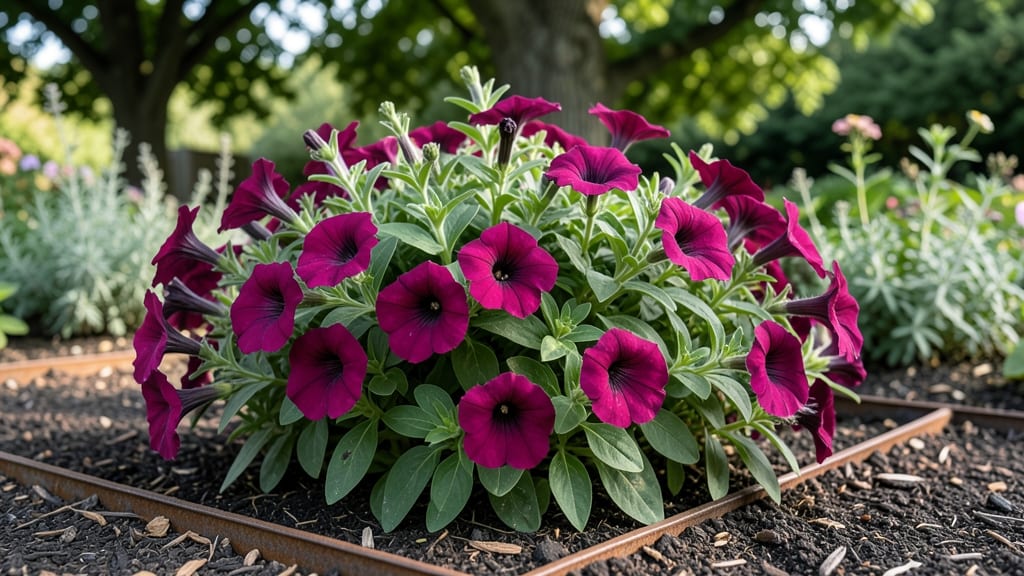
A front yard petunia flower bed that bursts with color from spring to frost is the kind of curb appeal that makes neighbors pause and smile.
I learned this the hard way—my first attempt was a chaotic mix of colors that faded by July, but now my beds stay vibrant all season with the right layout and plant pairings.
The secret starts with soil prep: petunias thrive in well-draining, slightly acidic soil mixed with compost. I plant in waves—early bloomers like 'Supertunia' first, then trailing varieties like 'Wave' for summer-long cascades.
Pair them with salvias or calibrachoas for height contrast, and add mulch to keep roots cool and moisture locked in.
By midsummer, your bed will be a nonstop show—deep purples, fiery oranges, and snowy whites spilling over edges. The key is deadheading spent blooms weekly and fertilizing every 4-6 weeks to keep flowers dense. Even in heatwaves, these plants deliver, as long as you water deeply in the morning.
Works for any front yard style—formal borders, cottage gardens, or modern containers. The same principles apply whether you're planting in full sun or partial shade. Let's make your petunias the star of the show!
📚 In This Guide
- What you need
- Instructions
- Tips and common mistakes
- Wrapping up and next steps
What you need
- ● Petunia plants: 12–20 plants (depending on bed size; choose a mix of colors and varieties like Grandiflora, Milliflora, or Supertunia for variety).
- ● Potting soil or garden soil: 2–3 cubic yards (amend with compost for better drainage and nutrients).
- ● Organic mulch: 1–2 bags (e.g., shredded bark or pine straw to retain moisture and suppress weeds).
- ● Slow-release fertilizer: 10–20 lbs (10-10-10 or a balanced formula like 14-14-14 for petunias).
- ● Watering can or hose with a gentle spray nozzle: (For consistent hydration without damaging delicate petunia blooms).
- ● Garden trowel or hand shovel: (For planting and soil amendments).
- ● Gloves: (To protect your hands from thorns or soil).
- ● Measuring tape or string: (To mark out the flower bed dimensions).
- ● Pruners or scissors: (For trimming dead blooms and shaping plants).
- ○ Edging tool (optional): (To create clean borders around your flower bed).
- ● Sunlight exposure: 6+ hours of full sun daily (petunias thrive in bright, sunny spots!).
- ● Well-draining soil: Petunias hate soggy roots—amend clay soil with perlite or sand if needed.
- ● Decorative rocks or pebbles: (For a polished, low-maintenance look).
- ● Stakes or cages: (To support taller petunia varieties like Grandiflora).
- ● Landscape fabric: (To block weeds before adding mulch).
- ● Color-coordinated garden stakes: (For labeling varieties or adding a whimsical touch).
- ● Drip irrigation system: (For automated, consistent watering).
How to create a stunning petunia flower bed that thrives all season
Here's how to plant a petunia display that blooms nonstop from spring to frost.
🌱 Step 1: Choose the Perfect Location and Prepare the Soil
Petunias crave full sun—at least 6-8 hours daily—so select a spot with unobstructed sunlight. I always test the area by observing how long sunlight lingers; morning sun alone won't cut it. Clear away weeds and loosen the soil to a depth of 12 inches, breaking up any compacted layers with a garden fork.
Amend the soil with 2-3 inches of compost mixed into the top 6 inches of earth. Petunias thrive in well-draining soil, so if your yard has heavy clay, blend in 1 part perlite or coarse sand per 2 parts soil. Work the amendments until the soil feels light and crumbly—like a well-aerated cake batter.
🪴 Step 2: Plant Petunias at the Right Depth and Spacing
Dig holes twice as wide as the petunia root balls but only as deep as the containers they came in. Gently remove plants from their pots, tease apart any circling roots, and place them in the holes so the top of the root ball sits just below soil level. Press the surrounding soil firmly to eliminate air pockets—this prevents wilting.
Space plants 12-18 inches apart for trailing varieties and 10-12 inches for bush types. Crowding leads to competition for nutrients and water, which weakens blooms. I like to arrange them in odd-numbered groupings (3, 5, or 7) for a natural, fuller look. Water each plant deeply after setting them in place.
☀️ Step 3: Water Consistently and Fertilize for Nonstop Blooms
Petunias need 1-1.5 inches of water per week, either from rain or irrigation. Water in the early morning to reduce evaporation and fungal risks. Stick your finger 1 inch into the soil—if it feels dry, it's time to water. Overhead watering can splash soil onto petals, promoting disease, so use a soaker hose or drip irrigation instead.
Feed plants every 2-3 weeks with a balanced liquid fertilizer (10-10-10 or 20-20-20) diluted to half-strength. I mix it into the watering can for even distribution. Deadhead spent blooms weekly by pinching off faded flowers just above the next set of leaves. This redirecting energy to new buds keeps the plant blooming until frost.
✂️ Step 4: Prune and Maintain for Long-Lasting Vibrancy
Pinch back leggy stems by one-third early in the season to encourage bushier growth. Use clean, sharp pruners and cut at a 45-degree angle just above a leaf node. Avoid heavy pruning later in the season—it can delay fall blooms. Watch for yellowing leaves, which often signal overwatering or nutrient deficiencies.
Mulch around plants with 2-3 inches of organic mulch (like shredded bark) to retain moisture and suppress weeds. Replenish mulch as it breaks down. If petunias start looking tired by midsummer, give them a light trim to remove any browned or damaged foliage. This refreshes the plant and encourages a second flush of vibrant blooms.
Tips & tricks for a thriving petunia flower bed
Took me a while to figure these out, so here goes—these simple tricks will help you avoid common pitfalls and keep your petunias looking their best all season.
Sunlight Secret: That 6-8 hours of daily sun is non-negotiable, but here's what I've learned: morning sun is better than afternoon for some varieties. If your yard gets intense afternoon heat, consider planting heat-tolerant petunia types like 'Supertunia' or 'Wave' in the hottest spots. Also, watch for nearby trees or structures that might cast shade as the sun moves across the sky—petunias will tell you when they're not getting enough light with fewer blooms and leggy stems.
Soil Prep Strategy: When amending your soil with 2-3 inches of compost, I like to add a handful of slow-release fertilizer granules right into the planting hole. This gives your petunias a nutrient boost right when they need it most. For heavy clay soil, mix in that perlite or coarse sand thoroughly—don't just sprinkle it on top. Think of it like making a smoothie: every spoonful needs to be well incorporated for even texture and drainage.
Planting Depth and Spacing: Here's what nobody tells you—those holes should be just deep enough so the top of the root ball sits at soil level, not buried. If you bury too deeply, the plant can suffocate and rot. And about spacing: while 12-18 inches for trailing varieties sounds standard, I've found that giving them 18-24 inches in hot climates prevents competition for water during dry spells. The extra space also makes deadheading and maintenance much easier.
Watering Wisdom: That 1-1.5 inches of water per week is a guideline, but timing matters just as much. I've learned the hard way that watering in the early morning isn't just about evaporation—it also helps prevent fungal diseases. If you must water in the evening, do it at least 2-3 hours before sunset to give the foliage time to dry. And here's a pro move: water at the base of the plant rather than overhead to keep those beautiful petals dry and disease-free.
Pro Tips for Front Yard Petunia Flower Bed
- Took me a while to figure these out, so here goes—these simple tricks will help you avoid common pitfalls and keep your petunias looking their best all season.
- Sunlight Secret: That 6-8 hours of daily sun is non-negotiable, but here's what I've learned: morning sun is better than afternoon for some varieties.
- Soil Prep Strategy: When amending your soil with 2-3 inches of compost, I like to add a handful of slow-release fertilizer granules right into the planting hole.
Frequently asked questions
Got questions about creating or maintaining a stunning front yard petunia flower bed?
Here are some of the most common ones—plus expert answers to help you grow with confidence!
When is the best time to plant petunias in my flower bed?
For most climates, plant petunias after the last frost in spring (typically late April to early June) or 6-8 weeks before the first fall frost for a late-season bloom. In warmer zones (like Zones 9-11), you can plant year-round!
How often should I water my petunia flower bed?
Water petunias deeply 2-3 times per week during hot, dry spells—aim for about 1 inch of water. Mulch around the base to retain moisture, and water early in the morning to reduce evaporation and fungal risks.
What are the most common pests for petunias, and how do I prevent them?
Petunias attract aphids, spider mites, and earwigs. To deter pests:
- Spray plants with neem oil weekly as a preventive.
- Encourage ladybugs and lacewings (natural predators) with companion plants like marigolds.
- Remove damaged leaves promptly to stop infestations.
Can I mix petunias with other flowers in my front yard bed?
Petunias pair beautifully with salvias, marigolds, snapdragons, and calibrachoas for height and texture contrast. Avoid planting with mint or invasive ground covers, which can crowd them out.
How do I keep my petunias blooming all season long?
Deadhead spent blooms weekly to encourage new flowers, and fertilize every 2-3 weeks with a balanced, water-soluble fertilizer (like 10-10-10). Prune leggy stems in early spring to promote bushier growth.
Will petunias survive winter in my climate?
Petunias are annuals and won’t survive freezing temps, but you can extend their life by:
- Planting fall varieties (like ‘Wave’ or ‘Supertunia’) for late blooms.
- Mulching heavily in mild winters (Zones 8-10) to protect roots.
- Starting new plants in spring for a fresh display!
Wrapping up and next steps
Transforming your front yard into a stunning petunia flower bed is easier—and more rewarding—than you think! With the right soil prep, plant selection, and care routine, you’ll enjoy bursts of color that brighten your space from spring to frost.
Whether you’re a seasoned gardener or just starting, these vibrant blooms are the perfect way to elevate your curb appeal and create a welcoming outdoor retreat.
Ready to dive in? Start small with a single bed or go big—either way, your future self (and neighbors!) will thank you. Grab your gloves, pick your petunia palette, and let’s get growing! 🌸✨