
Flowers
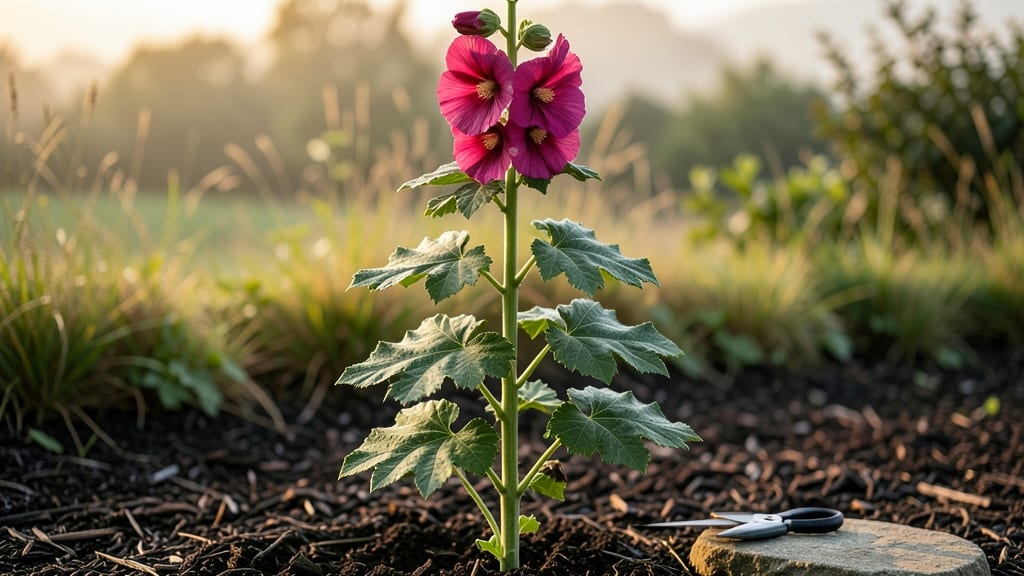
The hollyhock flower height can soar to 8 to 10 feet with the right care—taller than most gardeners realize. 🌿 I’ve watched mine stretch toward the sky like living ladders, their rust-colored stems supporting blooms that seem to defy gravity.
The secret isn’t just patience; it’s understanding what they need to grow upward instead of flopping over by midsummer.
Most varieties fall into two height categories: single-stemmed giants (like ‘Black Prince’ at 10 feet) and clustered types (like ‘Lady of Shalott’ at 6 feet). Sunlight, soil depth, and water consistency make the difference between a sturdy stalk and a wobbly one.
My first year, I ignored staking—big mistake. Now I treat them like skyscrapers, giving them support before they need it.
With proper care, you’ll end up with dramatic vertical accents in your garden—blooms at eye level when you’re standing, towering over trellises when fully mature. The key is balancing their natural growth with gentle guidance.
Think of them as nature’s own fire escapes for pollinators, with every bloom a landing pad for bees.
We’ll cover how to choose the right variety for your space, when to stake (spoiler: it’s earlier than you think), and how to prune for both height and longevity. Even in small gardens, these giants can shine—just with a little strategy.
📚 In This Guide
- What you need
- Instructions
- Tips and common mistakes
- Wrapping up and next steps
What you need
- ● Hollyhock seeds or seedlings: Choose heirloom varieties like 'Black Prince' or 'Peach Blush' for maximum height (up to 8+ feet!). Buy 5–10 seeds or 3–5 seedlings for a full display.
- ● Well-draining soil: Mix 1 part compost with 2 parts garden soil (pH 6.0–7.5). Test soil moisture—it should feel like a damp sponge, not soggy!
- ● Sunlight access: Full sun (6+ hours daily) is a must for towering blooms.
- ○ Support structures (optional but recommended):strong> Bamboo stakes or trellises (6–8 feet tall, 2–3 per plant).
- ● Strong twine or garden tape (for tying stems).
- ● Garden trowel or shovel for planting.
- ● Watering can or hose with a gentle spray nozzle (deep watering 1–2x/week).
- ● Pruning shears (for deadheading and shaping).
- ● Mulch (straw or shredded leaves) to retain moisture and suppress weeds.
- ○ Fertilizer (optional): Balanced 10-10-10 or organic options like compost tea (apply lightly every 4–6 weeks).
How to grow hollyhocks that reach their full height potential
Tall, dramatic blooms start with the right approach—here’s how to coax those towering stems.
🌱 Step 1: Choose the Right Variety and Plant in Deep Soil
Hollyhocks thrive when their roots have plenty of space to spread. I always select perennial varieties like 'Black Prince' or 'Chocolope' for their sturdy stems and height potential—some reach 8 feet tall with proper care. Plant seeds or transplants in well-draining soil that’s at least 18 inches deep—shallow roots lead to weak stems that flop.
Loosen the soil to a depth of 12 inches before planting. Hollyhocks hate compacted soil, which restricts root growth and limits height. Mix in a 2-inch layer of compost to enrich the soil naturally—this encourages strong root development from the start. If your soil drains poorly, add a handful of sand or perlite to improve aeration.
☀️ Step 2: Position for Maximum Sunlight and Airflow
Hollyhocks need full sun—at least 6-8 hours daily—to grow tall and sturdy. I plant mine in the sunnest spot in my garden, where they get morning light and afternoon sun without afternoon shade. Partial shade weakens stems and reduces bloom height by 20-30%, so avoid planting under trees or near tall structures.
Space plants 3-4 feet apart to allow airflow between stems. Crowding invites powdery mildew, a fungal disease that weakens plants and stunts growth. If you’re growing in a small space, choose dwarf varieties like 'Peach Blow' (5-6 feet tall) instead of giants. Mulch around the base with 2-3 inches of straw to retain moisture and suppress weeds that compete for nutrients.
💧 Step 3: Water Deeply and Consistently
Deep, infrequent watering is key to tall hollyhocks. I water at the base of the plant—never overhead—to prevent mildew and keep stems strong. Water once a week during dry spells, soaking the soil to a depth of 12 inches. Shallow watering encourages weak roots and leggy stems that can’t support heavy blooms.
Check soil moisture by sticking your finger 2 inches deep—if it feels dry, it’s time to water. Overwatering causes root rot, which collapses stems and reduces height. If rain is frequent, reduce watering to every 10-14 days unless the soil feels bone-dry. Hollyhocks are drought-tolerant once established, but young plants need consistent moisture to grow tall.
✂️ Step 4: Support Stems and Prune Strategically
Tall hollyhocks need support to prevent flopping. I install sturdy stakes or a trellis at planting time, tying stems loosely with soft garden twine as they grow. Avoid tight ties—they can girdle stems and weaken growth. Prune suckers (shoots growing from the base) in early spring to redirect energy into the main stems, which helps them grow taller.
Deadhead spent blooms regularly to encourage more flowers and prolong the season. Cut back stems to the first set of healthy leaves after flowering to promote a second flush of blooms. In late fall, cut back the entire plant to 6 inches tall to prevent disease and encourage stronger growth next year.
🌿 Step 5: Fertilize for Height and Bloom Power
Hollyhocks benefit from balanced fertilization in early spring. I use a 10-10-10 fertilizer (or organic equivalent) at half-strength to avoid burning roots. Apply it 6 inches away from the base and water it in well. Too much nitrogen makes plants leafy but short—focus on phosphorus and potassium for height and blooms.
Mid-summer is the second feeding time. Switch to a low-nitrogen, high-phosphorus fertilizer (like 5-10-5) to boost flowering. Stop fertilizing 6-8 weeks before your first frost—new growth won’t harden off properly and may die in winter. Hollyhocks are heavy feeders, but over-fertilizing leads to weak stems that can’t support their own weight.
Tips & tricks for perfect hollyhock height
Here's what nobody tells you about growing hollyhocks that actually reach their full potential.
Variety Matters: The 18-inch deep soil requirement in Step 1 is non-negotiable for tall varieties like 'Black Prince'. I've seen gardeners plant shallow and wonder why their 8-foot hollyhocks only reach 4 feet. For maximum height, stick with proven perennial varieties and give those roots the space they need to develop strong anchor systems.
Sunlight Strategy: That 6-8 hours of daily sun isn't just about light—it's about consistent morning sun followed by afternoon warmth. I've noticed hollyhocks planted in spots with afternoon shade often develop weak stems that can't support their own blooms. If your garden lacks full sun, consider using a sun calculator to map your space before planting.
Watering Wisdom: The 12-inch deep watering in Step 3 is crucial, but timing matters just as much. I water my hollyhocks in the early morning so the foliage has all day to dry completely. Wet leaves overnight create perfect conditions for powdery mildew, which can stunt growth by up to 30%. This simple habit has kept my plants healthier and taller than neighbors who water at night.
Support System: Don't wait until stems are already bending to install support. In Step 4, the instructions mention installing stakes at planting time, but I go further—I add a second stake when plants reach about 3 feet tall. This prevents the "leaning tower of Pisa" effect I've seen in many gardens. Use soft garden twine and check ties monthly to ensure they're not cutting into stems as they grow.
Pro Tips for Hollyhock Flower Height
- Here's what nobody tells you about growing hollyhocks that actually reach their full potential.
- Variety Matters: The 18-inch deep soil requirement in Step 1 is non-negotiable for tall varieties like 'Black Prince'.
- Sunlight Strategy: That 6-8 hours of daily sun isn't just about light—it's about consistent morning sun followed by afternoon warmth.
Frequently asked questions
Got questions about growing towering hollyhock blooms?
Here are answers to the most common queries about hollyhock flower height—from planting tips to troubleshooting—so you can enjoy those stunning vertical displays!
How tall do hollyhock flowers typically grow?
Hollyhocks usually reach 5 to 8 feet tall, but some varieties, like 'Peach Blow' or 'Black Prince', can soar up to 10 feet with proper care. Dwarf varieties (like 'Ladybird') stay around 3 to 4 feet. Height depends on sunlight, soil, and support!
What’s the best way to maximize hollyhock height?
For taller hollyhocks, plant in full sun (6+ hours/day), enrich soil with compost, and stake stems early (use soft ties to avoid damage). Deadhead spent blooms to encourage continuous growth. Pro tip: Space plants 18–24 inches apart for airflow and strength!
How long does it take for hollyhocks to reach full height?
Hollyhocks grow slowly but steadily. From seed, expect 60–90 days to first blooms, with full height achieved by late summer or early fall. Transplants may bloom faster (45–60 days). Patience pays off—these beauties are worth the wait!
Why aren’t my hollyhocks growing tall?
If your hollyhocks are stunted, check these fixes:
- Poor soil: Amend with phosphorus-rich fertilizer (like 5-10-10) for root and stem strength.
- Overcrowding: Thin plants to 12–18 inches apart for better airflow.
- Pests: Watch for hollyhock rust (orange spores) or aphids—treat with neem oil.
- Shade: Move to a sunny spot (they hate partial shade!).
Can I grow hollyhocks in containers? How tall will they get?
Yes! Choose dwarf varieties (like 'Bressingham White') for containers—they’ll hit 3–4 feet. Use a large pot (18+ inches deep) with well-draining soil and a support stake. Container hollyhocks may bloom slightly shorter but thrive with regular watering and fertilizer.
Do hollyhocks grow back every year, or are they annuals?
Hollyhocks are perennial in USDA zones 3–9 but often treated as biennials (bloom the second year). In colder climates, mulch heavily in winter. If they die back, they’ll regrow from the roots—just give them time!
Wrapping up and next steps
Growing towering hollyhock blooms is all about patience, the right care, and a little natural magic! 🌿 With well-drained soil, consistent watering, and strategic pruning, you’ll watch these giants of the garden reach their full potential—some even soaring over 8 feet tall.
Whether you’re a seasoned gardener or just starting, every stalk of hollyhock is a rewarding challenge.
Ready to turn your garden into a floral skyline? Start small—plant a few seeds or cuttings this season, and let their height become your next gardening triumph! 🌟