
Size
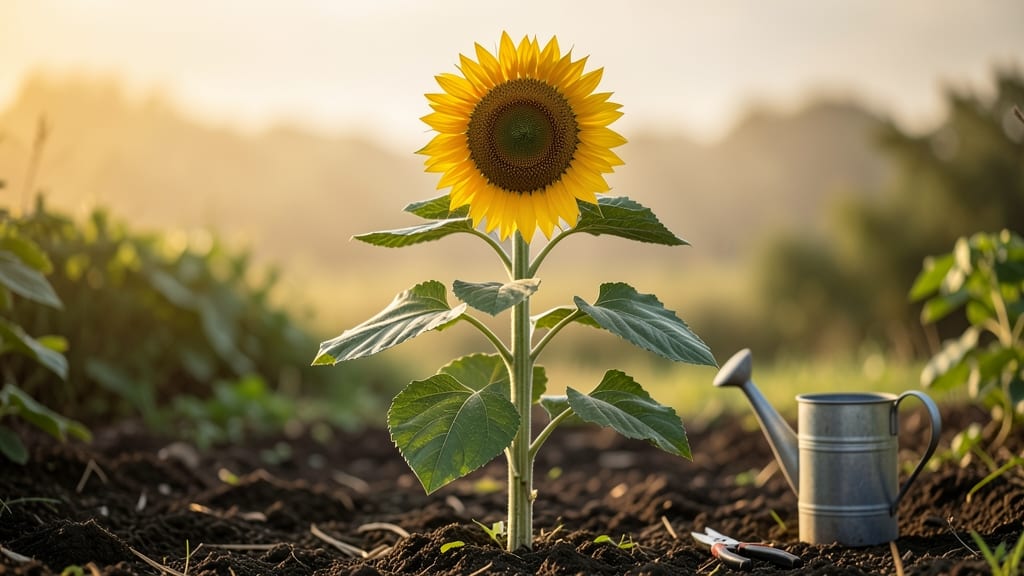
Learn how to grow huge sunflowers that tower over 12 feet by choosing the right variety—like 'Mammoth' or 'Russian Giant'—and feeding them the secret weapon: deep, nutrient-rich soil packed with compost. I learned this the hard way after my first attempt produced sunflowers that wilted by midsummer.
The difference between a 5-foot plant and a towering giant comes down to how you prep the ground and feed those hungry roots.
Sunflowers demand full sun (at least 6-8 hours daily) and consistent moisture, but here’s the trick: water deeply once a week rather than daily shallow drinks. Overwatering causes root rot, while underwatering stunts growth—both kill your giant ambitions.
A 3-inch layer of mulch keeps moisture locked in while suppressing weeds that compete for nutrients. Think of it as giving your sunflowers a cool, drink-filled oasis in the hot summer sun.
By midseason, you’ll notice the stems thickening and leaves growing broader—signs your sunflowers are on track for monster size. A balanced fertilizer (10-10-10) applied at planting and again when stems hit 3 feet fuels rapid growth.
And here’s the pro move: prune lower buds once the main stem reaches 5 feet to redirect energy upward. Within weeks, you’ll watch your sunflowers shoot past your porch roof, their faces tracking the sun like nature’s own compass.
This method works in zones 3-10, whether you’re planting in a backyard plot or large containers. The only real challenge? Patience—those giants take 90-120 days from seed to full height.
But when you finally see a sunflower taller than you, bending under its own weight, you’ll know the effort was worth every drop of water and scoop of compost.
📚 In This Guide
- What you need
- Instructions
- Tips and common mistakes
- Wrapping up and next steps
What you need
- ● Sunflower Seeds: Choose giant varieties like ‘Russian Giant,’ ‘Mammoth,’ or ‘American Giant’ (10–20 seeds per plant, depending on desired spacing).
- ● Well-draining soil: Mix garden soil with compost (ratio: 3 parts soil, 1 part compost).
- ● Fertilizer: Balanced 10-10-10 or 5-10-10 fertilizer (1 tbsp per plant at planting).
- ● Phosphorus-rich fertilizer (e.g., bone meal, 1 tbsp per plant at mid-season for blooms).
- ● Watering can or hose: With a fine spray nozzle for gentle watering.
- ● Stakes or cages: 6–8 ft tall (1–2 per plant for support).
- ● Mulch: Straw or wood chips (2–3 inches thick to retain moisture).
- ● Epsom salt: 1 tbsp dissolved in water (monthly for greener foliage).
- ● Mycorrhizal fungi: Boosts root growth (sprinkle at planting).
- ● Sunflower companion plants: Marigolds or borage to deter pests.
- ● Garden gloves: For easy handling of prickly stems.
Step-by-step instructions for cultivating towering sunflower giants
Here's how I've consistently grown sunflowers reaching over 10 feet—no shortcuts, just proven techniques.
🌱 Step 1: Select and Prepare the Right Variety and Soil
Choose a giant sunflower variety like 'Mammoth' or 'Russian Giant,' which are bred for height and sturdy stems. These varieties need deep, fertile soil rich in organic matter—sunflowers are heavy feeders and demand nutrients to support their massive growth. Amend your garden bed with 2-3 inches of compost mixed into the top 12 inches of soil before planting.
Sunflowers prefer well-draining soil with a pH between 6.0 and 7.5. If your soil is heavy clay, mix in sand or perlite to improve drainage. A soil test ensures you know what nutrients to supplement—sunflowers respond dramatically to phosphorus and potassium for strong root and stem development. I always test my soil in early spring so I can adjust amendments before planting.
☀️ Step 2: Plant at the Correct Depth and Spacing for Maximum Growth
Plant seeds 1 inch deep and 6 inches apart in rows spaced 2-3 feet apart. This spacing prevents overcrowding, which leads to weak stems and disease. Sunflowers need room to develop their massive root systems—crowded plants compete for nutrients and light, stunting their potential height.
Direct sow seeds after the last frost when soil temperatures reach at least 55°F. I plant mine in late spring when the ground is warm enough to ensure quick germination. Water the soil thoroughly before planting to create a moist environment that encourages strong root establishment. Place 2-3 seeds per hole and thin to the strongest seedling once they reach 3-4 inches tall—this ensures you don’t waste seeds and gives each plant the best start.
💧 Step 3: Water Deeply and Consistently to Support Towering Stems
Sunflowers need 1-2 inches of water per week, delivered at the soil level—not overhead. Overhead watering can cause powdery mildew, a common fungal issue that weakens stems. Use a soaker hose or drip irrigation to keep foliage dry while delivering moisture directly to the roots. Water deeply 2-3 times per week during dry spells, ensuring the soil is moist to a depth of 6-8 inches.
Deep watering encourages roots to grow downward, creating a strong anchor for the towering stem. If you notice leaves wilting or yellowing, it’s a sign the roots aren’t reaching deep enough—this is especially critical once the flower bud forms, as the plant diverts energy upward. Mulch around the base with 2-3 inches of organic mulch to retain moisture and suppress weeds, which compete for nutrients.
✂️ Step 4: Provide Support and Prune for Optimal Height and Bloom
Once sunflowers reach 3-4 feet tall, their stems may need support to prevent snapping under their own weight. I use bamboo stakes or sturdy wooden posts placed beside each plant and tie the stem loosely with soft plant ties or old fabric strips. Avoid wire ties—they can cut into the stem as it thickens. Check ties weekly to ensure they’re not restricting growth.
Remove any side buds that form below the main flower head to direct the plant’s energy into producing one massive bloom rather than multiple smaller ones. Pinch off these buds when they’re still small—this is called "bud thinning" and is key to growing giant sunflowers. The larger the flower head, the more the plant focuses on stem strength, which is what you want for those record-breaking heights.
🌿 Step 5: Fertilize Strategically for Stem Strength and Flower Size
Feed sunflowers with a balanced fertilizer (10-10-10 or 20-20-20) at planting and again when the plants reach 12 inches tall. I use ½ cup of granular fertilizer per plant, worked into the soil around the base. Avoid high-nitrogen fertilizers—they promote leafy growth at the expense of stem strength and flower size. Instead, focus on phosphorus and potassium to encourage root development and flower production.
Once the flower bud forms, switch to a low-nitrogen, high-phosphorus fertilizer (like 5-10-10) to support blooming. Water the fertilizer in immediately after applying to prevent root burn. Monitor the plants for signs of nutrient deficiency—yellowing leaves indicate a nitrogen issue, while purple stems signal a phosphorus deficiency. Adjust your feeding schedule based on these visual cues to keep the plants thriving.
Tips & tricks for cultivating towering sunflower giants
Real talk: The difference between a 5-foot sunflower and one that reaches for the sky often comes down to these three overlooked details.
Soil Preparation Secret: Before planting, mix in 2-3 inches of compost into the top 12 inches of soil—this creates a nutrient-rich zone where roots will thrive. I've found that adding a handful of bone meal (rich in phosphorus) at this stage gives stems that extra strength for supporting massive flower heads. For clay-heavy soils, incorporate sand or perlite to improve drainage without compromising moisture retention.
Planting Precision: Those 1-inch deep seeds need perfect conditions to germinate quickly. I've learned to pre-soak seeds overnight in warm water before planting—this jumpstarts germination and gives seedlings a head start. When thinning to the strongest seedling at 3-4 inches, leave the one with the most vigorous cotyledons (seed leaves) as these indicate strong genetic potential for height.
Watering Strategy: The 1-2 inches of water per week guideline is critical, but timing matters just as much. I water in the early morning when evaporation rates are lowest, delivering moisture directly to the soil with a soaker hose. The 6-8 inch deep moisture requirement means you're not just watering the surface—you're encouraging roots to grow downward where they'll find stability for supporting those towering stems.
Support System: When your sunflowers hit 3-4 feet and start leaning, don't wait to stake them. I use bamboo stakes inserted at a 45-degree angle for maximum stability, then wrap the stem loosely with fabric strips. The key is to check these ties weekly—they should allow for growth while preventing any restriction that could weaken the stem over time.
Pro Tips for Grow Huge Sunflowers
- Real talk: The difference between a 5-foot sunflower and one that reaches for the sky often comes down to these three overlooked details.
- Soil Preparation Secret: Before planting, mix in 2-3 inches of compost into the top 12 inches of soil—this creates a nutrient-rich zone where roots will thrive.
- Planting Precision: Those 1-inch deep seeds need perfect conditions to germinate quickly.
Frequently asked questions
Got questions about growing sunflowers to sky-high glory?
You’re not alone! Here are answers to the most common queries from gardeners eager to cultivate giant sunflowers—plus a few pro tips to keep your blooms thriving.
How long does it take for sunflowers to reach their full height?
Most giant sunflower varieties take 80–120 days from seed to full height (often 10–14 feet!). Early bloomers like ‘Mammoth’ may flower in 90 days, while ‘Russian Giant’ can take up to 130 days. Start seeds indoors 4–6 weeks before your last frost for a head start!
Can I grow huge sunflowers from store-bought seeds, or do I need special seeds?
Store-bought seeds (like Helianthus annuus) will grow, but for monster-sized blooms, opt for heirloom or hybrid varieties labeled “giant.” Try ‘Russian Giant,’ ‘Mammoth,’ or ‘Autumn Beauty’—they’re bred for height and drama. Pro tip: Check seed packets for days to maturity to match your growing zone!
Why are my sunflowers wilting or dying even with plenty of water?
Wilting often signals root stress or pests. Check for:
- Overwatering: Sunflowers hate soggy soil. Let the top 2 inches dry between waterings.
- Pests: Slugs, aphids, or cutworms can decimate stems. Use neem oil or diatomaceous earth.
- Fungal issues: Yellow leaves? Rotate crops next year and improve drainage.
Give them 6+ hours of sun and well-draining soil to avoid future woes!
What’s the best way to stake or support giant sunflowers?
Sunflowers are top-heavy! Use:
- Sturdy stakes: 6–8 ft bamboo or metal stakes driven deep (1–2 ft into soil). Tie stems loosely with soft fabric strips (avoid wire—it cuts!).
- Cages or spirals: Pre-made sunflower cages work for shorter varieties (8–10 ft).
- Trellis hack: For windy areas, weave stems through a wire trellis for natural support.
Wait until plants are 3–4 ft tall to stake—earlier support can stunt growth.
Can I grow sunflowers in containers, or do they need a garden bed?
Yes! Giant sunflowers thrive in large containers (15+ gallons) with:
- Well-draining mix: 60% potting soil, 30% compost, 10% perlite.
- Depth: At least 18–24 inches deep for roots.
- Staking early: Containers tip easily—secure stakes before plants get heavy.
Dwarf varieties like ‘Teddy Bear’ (3–5 ft) are better for small pots (5+ gallons).
Wrapping up and next steps
Growing towering sunflowers is all about patience, the right conditions, and a little extra love—but trust us, the results are worth it! 🌻 With the perfect soil, consistent care, and a few pro tricks like deep watering and strategic pruning, you’ll be watching those giant blooms reach for the sky in no time.
Whether you’re a first-time gardener or a seasoned green thumb, every step you take brings you closer to sunflowers that’ll make your neighbors jealous.
Ready to turn your garden into a sunflower showstopper? Start by planting your seeds this season—and don’t forget to share your progress (and those stunning photos!) with fellow sunflower enthusiasts. Happy growing!