
Orchid Care
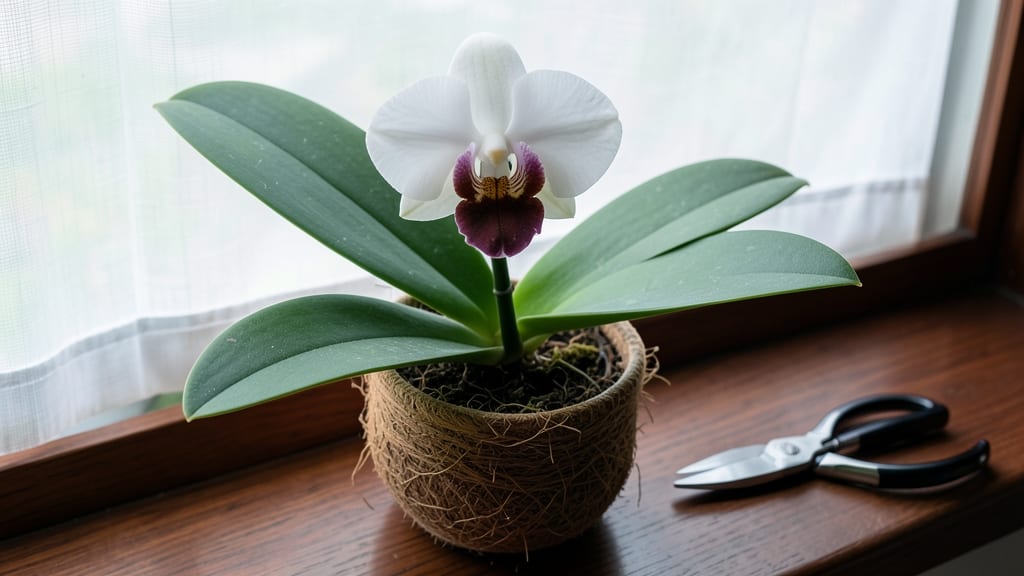
Understanding the parts of an orchid flower unlocks the secrets to growing thriving plants. 🌸 Every petal, stem, and hidden structure plays a role in how your orchid blooms, survives, and even reproduces—knowledge that turns guesswork into confident care.
The labellum (that unique, often colorful lip) isn’t just for show—it’s the landing pad for pollinators. The three sepals shield the flower in bud form, while the column (the tall, central structure) houses both male and female reproductive parts.
Even the ovary at the base holds the future of your plant, developing into seed pods after pollination.
When you recognize these parts, you’ll spot health issues early—yellowing sepals signal stress, a wilted labellum means overwatering, and a shriveled column could indicate disease. This isn’t just botany; it’s your orchid’s roadmap to better blooms and longer-lasting flowers.
Think of it like learning a new language: once you know the words, every bloom tells a story. Next, we’ll map out each part with simple visual cues so you can identify them in seconds—no horticulture degree required.
📚 In This Guide
- What you need
- Instructions
- Tips and common mistakes
- Wrapping up and next steps
What you need
- ● Fresh or preserved orchid flowers – At least 3-5 blooms (preferably from different orchid varieties for comparison). Live flowers work best, but dried specimens can also work in a pinch! 🌿
- ● Hand lens or magnifying glass – A 10x magnification lens is ideal for examining delicate structures like the column or labellum.
- ● Ruler or measuring tape – For recording sizes (e.g., petal length, sepal width). A 6-inch ruler with metric measurements is perfect.
- ● Notebook and pen – To sketch or jot down observations. A small spiral notebook or digital note-taking app works great!
- ● Light source – Natural daylight or a LED desk lamp (avoid harsh overhead lighting to prevent glare).
- ○ Tweezers (optional but helpful) – Fine-tip tweezers for gently separating flower parts without damage.
- ● Camera or smartphone – For close-up photos of each part (use macro mode if available!).
- ● Field guide or orchid ID app – Like iNaturalist or Orchid Identification Guide for cross-referencing.
- ● Labeling tags or sticky notes – To mark specific parts (e.g., "labellum," "anther cap") during dissection.
- ● Glass or plastic tray – A shallow 12x12-inch tray to lay out flower parts for easy study.
How to identify every part of an orchid flower
Orchids reveal their secrets once you know what to look for—here’s how to decode their stunning anatomy.
🌿 Step 1: Locate the Labellum (Lip) and Its Unique Role
The labellum is the orchid’s most distinctive feature, often brightly colored or uniquely shaped to attract pollinators. Unlike other petals, it’s always positioned at the bottom of the flower and may appear larger or more intricate than the surrounding segments. This modified petal serves as a landing platform for insects, guiding them toward the reproductive structures.
Run your finger along the base of the flower—you’ll feel the labellum’s distinct texture, which often includes ridges, hairs, or even mimicry of nectar guides. In some species, like Phalaenopsis, the labellum resembles a butterfly’s wing, while in Cattleya, it may look like a tiny, delicate cup. This part is non-reproductive but critical for pollination success.
🌱 Step 2: Find the Column (The Orchid’s Reproductive Core)
Hidden behind the labellum, the column is the orchid’s fused reproductive organ, housing both male and female structures. It’s typically a thick, vertical structure rising from the base of the flower. To spot it, gently lift the labellum upward—you’ll see a small, often greenish or yellowish protrusion with two tiny openings at the top.
This column contains the stigma (female part) and anther (male part), sometimes with a sticky, pollen-covered cap called the pollinarium. In some orchids, the column may curve or twist, adapting to the pollinator’s shape. Never touch it unless you’re ready for pollen transfer—orchids rely on precise pollination for fruit development.
☀️ Step 3: Differentiate Sepals and Petals (The Outer Framework)
Orchid flowers have three outer segments: two identical dorsal sepals at the back and one lateral sepal that often blends with the labellum’s shape. These sepals are typically green or match the flower’s color scheme. The three inner segments are the petals, with the labellum being the third "petal" that’s structurally different.
To test your identification, count the segments: if you see three outer structures (sepals) and three inner structures (two petals + labellum), you’re on the right track. The sepals provide structural support, while the petals enhance visual appeal. In some orchids, like Dendrobium, the sepals may be leathery and upright, while petals are softer and more delicate.
✂️ Step 4: Spot the Ovary and Peduncle (The Flower’s Foundation)
The ovary is the swollen base of the flower, often green and sometimes elongated, where the flower attaches to the stem (peduncle). It’s the future home of orchid seed pods if pollination occurs. To find it, look at the point where the flower meets the stem—you’ll see a small, bulbous structure that may feel slightly firmer than the rest of the flower.
This ovary is unique because orchid seeds develop inside it rather than on its surface, unlike many other plants. The peduncle, or flower stalk, supports the entire structure and may produce multiple blooms in a spike. In some orchids, like Oncidium, the ovary is almost invisible, while in Cymbidium, it’s more pronounced and may even continue growing after flowering.
💧 Step 5: Observe the Bracts (The Hidden Protectors)
Bracts are the small, often green structures at the base of each flower or along the stem. They may look like tiny leaves or scales and serve to protect developing buds. In some orchids, like Paphiopedilum, the bracts are large and colorful, mimicking petals, while in others, they’re barely noticeable.
To find them, examine the stem between flowers—you’ll see these modified leaves either hugging the stem or slightly separated. Bracts play a crucial role in guiding pollinators to the flowers and sometimes even participate in photosynthesis. In tropical orchids, they may also help retain moisture around the buds during humid conditions.
Tips & tricks for perfect orchid flower identification
These insider secrets will help you decode orchid anatomy like a botanical expert—no prior knowledge required.
Step 1 Visual Cue: When examining the labellum in Step 1, hold the flower at eye level against a white background. The contrast will make its unique patterns—like the butterfly-like markings in Phalaenopsis—pop dramatically. I've found that using a magnifying glass (3x power) reveals hidden textures like tiny hairs or waxy coatings that distinguish species. This works especially well for pale-colored labella where details might otherwise blend in.
Column Examination Technique: In Step 2, when lifting the labellum to reveal the column, use a gentle but firm motion—think "peeling back a curtain" rather than prying. The column's two openings at the top (where pollen is produced) are often obscured by a translucent membrane. Shine a small flashlight at a shallow angle to see these structures clearly without damaging delicate tissues. This method prevents accidental pollen transfer to your fingers, which could contaminate future observations.
Sepal-Petal Distinction: For Step 3's segment counting, I recommend this memory trick: "Two at the back, one on the side, three inside total." The dorsal sepals (two at the back) are always identical, while the lateral sepal often appears fused to the labellum's base. A helpful test is to gently press each segment—sepals will feel slightly thicker and more rigid than the softer petals. This tactile difference is especially noticeable in Cattleya hybrids where color patterns can be deceptive.
Ovary Observation Hack: When locating the ovary in Step 4, compare its texture to the rest of the flower stem. Orchid ovaries often feel slightly waxy or rubbery to the touch, almost like a tiny green bead. For species with hidden ovaries (like Oncidium), trace the stem upward from the base—you'll notice a subtle change in diameter where the ovary begins. This visual landmark is crucial for understanding how pollination will develop seed pods.
Pro Tips for Parts Of An Orchid Flower
- These insider secrets will help you decode orchid anatomy like a botanical expert—no prior knowledge required.
- Step 1 Visual Cue: When examining the labellum in Step 1, hold the flower at eye level against a white background.
- Column Examination Technique: In Step 2, when lifting the labellum to reveal the column, use a gentle but firm motion—think "peeling back a curtain" rather than prying.
Frequently asked questions
Got questions about orchid flower anatomy? You’re not alone! Here are some of the most common queries—plus quick, practical answers to help you navigate those delicate petals like a pro.
What’s the difference between an orchid’s sepals and petals?
The sepals (the three outer structures) protect the flower bud, while the petals (often the two larger, showier ones) attract pollinators. Sepals are usually greener or less vibrant. Think of them as the orchid’s “security team” and the petals as its “marketing squad.”
How long do orchid flowers last, and why do they wilt so fast?
Most orchid blooms last 2–6 weeks, depending on the species. Wilting happens naturally as energy shifts to seed production. Overwatering, extreme temps (<60°F or >90°F), or drafts can speed up the process. Pro tip: Keep humidity steady (40–70%) and avoid direct sunlight to extend their lifespan.
Can I replant an orchid after its flowers fall off?
Yes! Once flowers fade, the spike (the stem) may produce new blooms if it’s healthy. Trim it above a node (a raised bump) to encourage regrowth. If the spike is brown and shriveled, cut it back to the base. Warning: Sterilize scissors with rubbing alcohol to prevent infection.
Why does my orchid have weird-looking “extra” parts?
That’s likely the labellum (the unique, often lip-shaped petal) or column (the reproductive center). Orchids are quirky! Some species have calli (tiny hair-like structures) or bracts (leaf-like appendages). Don’t panic—it’s all part of their wild charm. Fun fact: The labellum mimics food or scent to lure pollinators!
How do I tell if my orchid is healthy or dying?
Healthy orchids have firm, green pseudobulbs and roots that look silver-green (not mushy or black). Wrinkled leaves, yellowing, or roots that fall apart when touched signal trouble. Quick fix: Repot in orchid bark mix and adjust watering—soak and dry thoroughly to prevent rot.
Wrapping up and next steps
Understanding the parts of an orchid flower unlocks the secret to nurturing these stunning plants with confidence! From the vibrant labellum to the delicate column, each piece plays a crucial role in their growth and blooming. Now that you’re armed with this knowledge, why not put it to use?
🌱 Next Steps:
- Grab a magnifying glass and observe your orchid’s unique features up close!
- Experiment with care tweaks—like adjusting light or humidity—based on what you’ve learned.
- Share your newfound expertise with fellow plant lovers (or post a pic of your orchid’s parts on social media!).