
Flowers
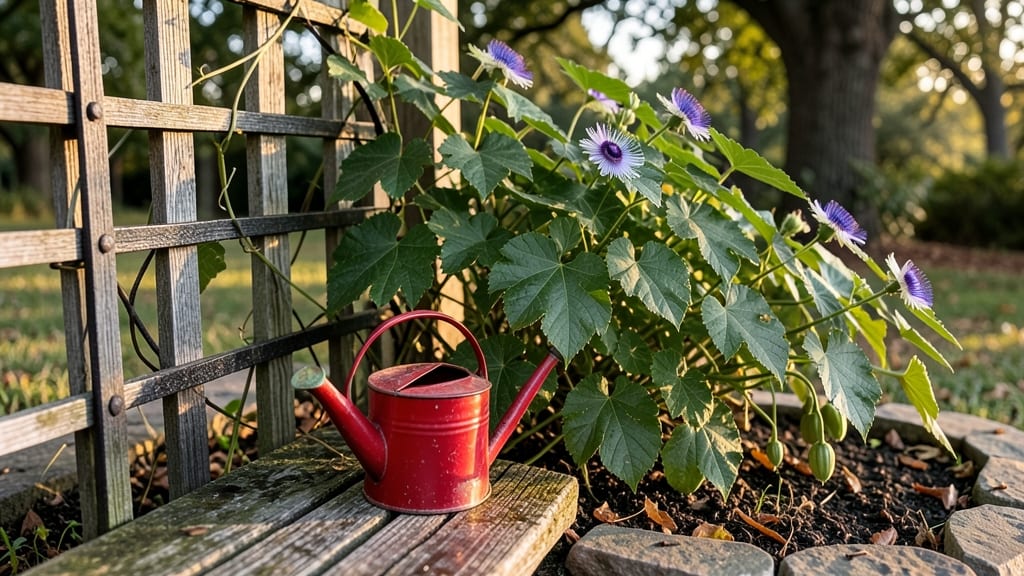
Mastering passion flower vine care unlocks their wild, rainforest-like blooms—yet in my Zone 7 backyard, they flourish effortlessly with almost no fuss. 🌿 The secret lies in letting them grow wild while steering them... with just a few smart cuts each year.
Most gardeners over-prune, turning their vines into tangled messes, but I’ve found the sweet spot: three simple cuts that keep them lush without the work.
These vines are low-maintenance survivors—they tolerate partial shade, irregular watering, and even poor soil as long as you avoid soggy roots. My biggest breakthrough? Treating them like a perennial climber rather than an annual.
Once established, they’ll send up new growth from the base every spring, producing those signature 3-inch-wide flowers by midsummer. The key is understanding their natural rhythm: prune after blooming, never before.
You’ll end up with vines that burst into color year after year, their deep purple blooms attracting hummingbirds like magnets. The foliage stays vibrant even in heat waves, and the vines themselves become a living trellis that outlasts most annuals.
Best of all, the pruning takes less than 10 minutes—just snip back last year’s growth to encourage fresh shoots. Let’s get those vines thriving with minimal effort.
Works equally well on fences, arbors, or even trained up a sturdy tree. Whether you’re a beginner or a seasoned gardener, this approach cuts the guesswork while keeping your passion flowers showstopping. Ready to simplify your vine care?
📚 In This Guide
- What you need
- Instructions
- Tips and common mistakes
- Wrapping up and next steps
What you need
- ● Passion flower vine: Choose between seeds (soaked overnight for faster germination) or a young plant from a nursery. Pro tip: Opt for disease-resistant varieties like Passiflora incarnata (maypop) or Passiflora caerulea (blue passionflower) for low-maintenance care!
- ● Well-draining potting mix or garden soil: 5–10 gallons (depending on pot size) enriched with compost or aged manure (20–30% mix ratio). Avoid heavy clay soil—passion vines hate soggy roots!
- ● Containers (if growing in pots): Minimum 5-gallon pot (12–18 inches deep) for young vines.
- ● 10–15-gallon pot (or larger) for mature vines with trellises.
- ● Drainage holes (non-negotiable!)
- ○ Lightweight, breathable fabric pots (optional but recommended for airflow).
- ● Trellis or support structure: Metal, wooden, or PVC trellis (6–10 feet tall) for vertical growth.
- ● Strong twine or garden ties (to secure vines gently).
- ● Obelisk or arbor (for decorative climbing).
- ● Watering can or hose with adjustable nozzle: Aim for 1–2 gallons per watering (adjust based on climate).
- ● Balanced, water-soluble fertilizer: 10-10-10 or 20-20-20 NPK ratio (diluted to half-strength). Use every 4–6 weeks during growing season (spring–fall).
- ● Pruning shears: Sharp, bypass pruners (sterilized with rubbing alcohol).
- ● Mulch (organic): 2–3 inches of shredded bark or straw to retain moisture and suppress weeds.
- ● Slow-release fertilizer granules (mixed into soil at planting).
- ● Epsom salt (1 tbsp per gallon of water, monthly) for magnesium boost.
- ● Neem oil or insecticidal soap (for pest prevention).
- ● Grow lights or shade cloth (if growing indoors or in hot climates).
- ● Soil moisture meter (to avoid over/under-watering).
Step-by-Step instructions for growing healthy passion flower vines
Here's how I keep my passion vines thriving with bold blooms and minimal fuss—no green thumb required.
🌱 Step 1: Choose the Perfect Planting Spot
Passion vines crave 6+ hours of direct sunlight daily, but they'll tolerate morning sun with afternoon shade in hotter climates. I always scout locations where the vine can climb naturally—trellises, fences, or pergolas work best. The key is vertical support to prevent sprawling and encourage upward growth, which leads to more blooms.
Check soil drainage before planting. Passion vines hate soggy roots, so if your garden holds water, amend with 2-3 inches of compost or plant in a raised bed. Press your finger 2 inches deep—if moisture lingers for hours, improve drainage first. The ideal spot balances sun exposure with airflow to prevent fungal issues.
💧 Step 2: Water Deeply and Establish a Routine
Newly planted vines need 1-1.5 inches of water per week, but don't water on a schedule—check the soil first. Stick your finger 1-2 inches deep—if it feels dry, water thoroughly until moisture reaches 6 inches down. Overwatering is the #1 killer of passion vines, so let the top 3-4 inches dry between waterings once established.
Mulch around the base with 2-3 inches of organic mulch (like shredded bark) to retain moisture and regulate soil temperature. Keep mulch 3 inches away from the stem to prevent rot. Young vines benefit from weekly deep waterings during their first growing season, but mature plants thrive with less frequent, deeper soakings.
☀️ Step 3: Provide Support and Train the Vine
Install a 5-6 foot trellis or sturdy fence before planting—passion vines grow 10-20 feet per season and need immediate support. I use galvanized wire or wooden slats spaced 6 inches apart for climbing. As new growth appears, gently weave or tie the main stems to the support using soft plant ties (never wire or twine—it cuts into tender vines).
Prune back any leggy growth that exceeds the trellis height by one-third to encourage bushier, bloom-heavy growth. Watch for new lateral branches forming at leaf nodes—these are where most flowers develop. Remove only dead or crossing branches, as passion vines bloom on new wood and need healthy growth to produce.
✂️ Step 4: Prune Strategically for More Blooms
Here's the thing—passion vines bloom best when pruned after flowering. Once blooms fade, cut back one-third of the oldest stems at the base to redirect energy to newer growth. I prune in early spring and again after the first flush of flowers in summer. Always use clean, sharp pruners and make cuts at a 45-degree angle just above a leaf node.
Never remove more than one-third of the vine at a time—this stresses the plant and reduces next year's blooms. If your vine gets too leggy, prune back selective stems to maintain shape. You'll notice new shoots emerging from the base within weeks—that's your reward for proper pruning.
🌿 Step 5: Feed and Protect for Long-Term Health
Passion vines aren't heavy feeders, but they respond well to balanced fertilizer (10-10-10) applied once in early spring and again after flowering. I mix 1 tablespoon of fertilizer into the soil around the base, then water deeply to distribute nutrients. Avoid high-nitrogen fertilizers—they promote leafy growth at the expense of blooms.
Watch for aphids or spider mites on new growth—these pests suck sap and weaken vines. Spray infested areas with neem oil solution (1 tablespoon per quart of water) or introduce ladybugs for natural control. Healthy vines develop a thick, waxy coating on leaves, which deters most pests—this is a good sign you're doing everything right.
Tips & tricks for perfect passion flower vine care
Passion vines reward patience with stunning blooms—here's how to maximize their potential without the guesswork.
Sunlight Strategy: While the instructions mention 6+ hours of direct sunlight, I've found that positioning your vine to catch morning sun with afternoon shade in hotter climates actually preserves more blooms. The key is observing your vine's leaves—if they start yellowing or curling by late afternoon, it's getting too much midday heat. Adjust gradually by moving to partial shade if needed, but never suddenly. Passion vines are surprisingly adaptable once established.
Pruning Precision: When Step 4 mentions cutting back one-third of the oldest stems, I focus on the thinnest, woody stems first—they're the ones that have already produced flowers. These stems won't regrow as vigorously, so removing them redirects energy to newer growth where you'll get next year's blooms. Always make cuts just above a leaf node, and avoid cutting into the green growth where new flowers will form.
Watering Wisdom: The 1-1.5 inches per week guideline works, but I've learned to adjust based on your soil type. Sandy soils dry out faster—check moisture at 1-2 inches deep every 2-3 days in summer. Clay soils hold moisture longer, so you might only need watering every 5-7 days. The top 3-4 inches drying between waterings is your best indicator, not a rigid schedule. A simple soil moisture meter makes this effortless.
Support System: For the 5-6 foot trellis recommendation, I've had success with obelisks or A-frame structures in small gardens—they save space while providing the same vertical support. When training vines, I use soft plant ties made from old t-shirts or pantyhose instead of store-bought ones. They're just as effective and biodegradable, plus you can reuse them year after year. The key is to tie loosely enough that you can still slide your fingers between the vine and support.
Pro Tips for Passion Flower Vine Care
- Passion vines reward patience with stunning blooms—here's how to maximize their potential without the guesswork.
- Sunlight Strategy: While the instructions mention 6+ hours of direct sunlight, I've found that positioning your vine to catch morning sun with afternoon shade in hotter climates actually preserves more blooms.
- Pruning Precision: When Step 4 mentions cutting back one-third of the oldest stems, I focus on the thinnest, woody stems first—they're the ones that have already produced flowers.
Frequently asked questions
Got questions about keeping your passion flower vine happy? You’re not alone! Here are some of the most common concerns—and their straightforward solutions.
How often should I water my passion flower vine?
Passion vines thrive with consistent moisture but hate soggy roots. Water deeply 1-2 times per week, letting the top 1-2 inches of soil dry out between sessions. In hot climates, increase frequency, but ensure pots have drainage holes to prevent root rot.
Why isn’t my passion flower vine blooming?
Blooms need sunlight, maturity, and patience! Most vines take 1-2 years to flower. Ensure it gets 6+ hours of sun daily and fertilize lightly (balanced 10-10-10) in spring. Overcrowded roots or insufficient light are common culprits—prune back leggy growth to encourage bushier, flower-heavy vines.
Can passion flower vines grow indoors?
Yes, but with compromises! They need a bright, south-facing window or grow lights for 6+ hours/day. Use a trellis or wall mount, and keep humidity high (mist leaves or use a pebble tray). Expect slower growth and fewer blooms than outdoor vines. A sunny patio or greenhouse is ideal if space allows!
How do I prune my passion flower vine for more flowers?
Prune in early spring to shape the vine and encourage blooms. Cut back overly long or leggy stems by ⅓, focusing on older wood. Remove dead/diseased branches year-round. Avoid heavy pruning after summer—new growth won’t harden off before winter. Use clean, sharp shears to prevent damage!
Are passion flower vines toxic to pets or humans?
Most parts of the vine are mildly toxic if ingested, causing stomach upset (vomiting, diarrhea) in pets and humans. Keep vines out of reach of curious pets or children. Symptoms usually resolve quickly, but contact a vet/poison control if ingestion occurs. Opt for pet-safe alternatives like morning glories if safety is a concern.
What’s the best trellis for a passion flower vine?
Choose a durable, sturdy trellis with large gaps (2-4 inches) for tendrils to grip. Arbors, pergolas, or DIY wire cages work well. Avoid plastic—passion vines can get heavy! For containers, a 5-foot tall bamboo or metal trellis is perfect. Train young vines early to climb for maximum support.
Wrapping up and next steps
Caring for your passion flower vine is a rewarding journey that brings stunning blooms with surprisingly little effort! 🌿 With the right balance of sunlight, water, and occasional pruning, you’ll enjoy lush growth and vibrant flowers year after year.
Whether you’re a seasoned gardener or just starting, these tips make it easy to nurture a thriving vine.
Ready to watch your passion flower vine flourish? Start by assessing your plant’s needs today—adjust sunlight, prune strategically, or troubleshoot common issues. Every small step keeps your vine healthy and blooming beautifully.