
Container Gardens
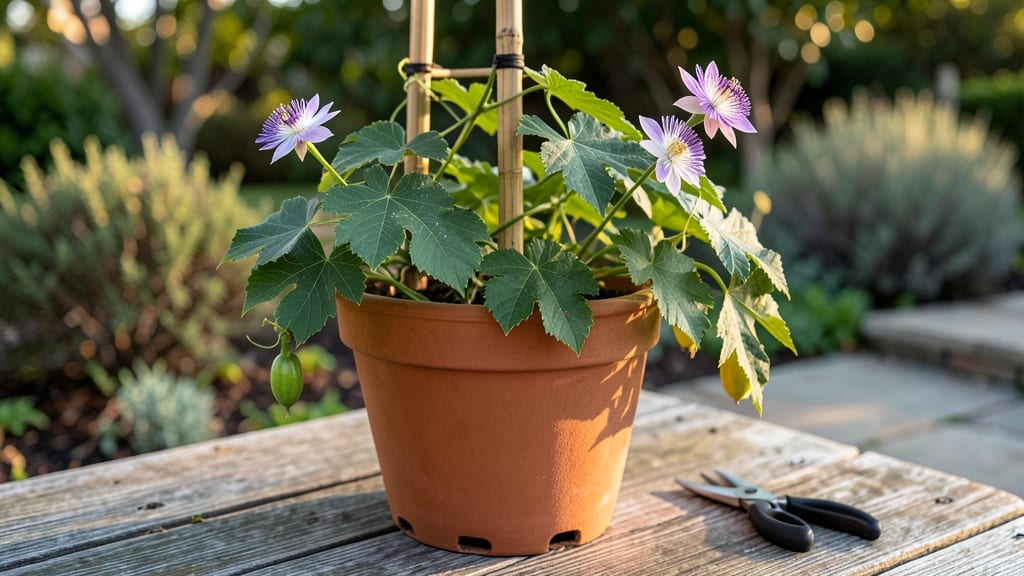
Growing passion flower in containers lets you enjoy these exotic vines even in small spaces—no yard required. 🌿 I’ve watched my Passiflora caerulea climb a trellis on my balcony, producing delicate blue flowers and edible fruit all summer long, and it only needs a 15-gallon pot to thrive.
The key is matching the right container, soil, and sunlight to the plant’s tropical roots while keeping maintenance simple enough for busy gardeners.
Start with a 5-gallon minimum for dwarf varieties like Passiflora ‘Blue Moon’, but upgrade to 10+ gallons for climbing types like Passiflora edulis. Terracotta pots help prevent root rot, and well-draining soil with perlite keeps the roots happy.
Place your container where it gets at least 6 hours of sunlight daily—morning sun and afternoon shade works best in hot climates. Water when the top inch of soil feels dry, but never let it sit soggy.
With proper care, you’ll see vibrant blooms by midsummer and lush, fragrant foliage that attracts hummingbirds. Prune back leggy growth in early spring to encourage bushier vines, and fertilize lightly every 4-6 weeks during growing season.
The best part? These vines handle container life better than most tropicals, making them the perfect low-maintenance statement plant for patios or decks.
Even in Zone 5, you can overwinter Passiflora caerulea indoors near a bright window—just reduce watering and avoid drafts. For edible varieties like Passiflora edulis, harvest fruit when fully ripe for a tangy, tropical treat.
The only real challenge is keeping roots from circling, but repotting every 2-3 years solves that easily.
📚 In This Guide
- What you need
- Instructions
- Tips and common mistakes
- Wrapping up and next steps
What you need
- ● Container: At least 5-gallon size (12–18 inches deep) with drainage holes. Terracotta or fabric pots work best for airflow.
- ● Passion flower plant: Choose Passiflora edulis (purple passionfruit) or Passiflora caerulea (blue passionflower) from a nursery.
- ● Well-draining potting mix: 50% premium cactus/succulent mix + 50% perlite or orchid bark (avoid heavy garden soil!).
- ● Slow-release fertilizer: Balanced 10-10-10 or organic options (follow label for dosage).
- ● Support structure: Trellis, bamboo stake, or cage (3–6 feet tall) for climbing.
- ● Hand trowel or small shovel for repotting.
- ● Spray bottle for misting (if humidity is low).
- ● Pruning shears (sterilized) for trimming.
- ● pH testing kit (ideal range: 6.0–7.0).
- ● Mulch (e.g., cocoa fiber) to retain moisture.
Step-by-step instructions for cultivating passion flower in containers
Here’s how to turn a small balcony or patio into a lush passion flower haven—no yard required!
🌱 Step 1: Select the Right Container and Soil Mix
Passion flowers need well-draining soil and room to spread, so choose a 5-gallon container (minimum) with drainage holes—unglazed terra cotta works best. The roots hate soggy feet, so if your pot lacks holes, drill them yourself. I mix equal parts potting mix, perlite, and compost for that perfect airy, nutrient-rich blend. Fill the pot 2/3 full, leaving space for the vine’s aggressive growth.
Press the soil down gently—just enough to remove air pockets but not so hard it compacts. The surface should look loose, like crumbled cake. This ensures roots can breathe and water drains freely. If you’re planting multiple vines, space them 12 inches apart at the start; they’ll tangle beautifully as they mature.
☀️ Step 2: Position for Maximum Sunlight and Support
Passion vines are sun-worshippers, craving 6+ hours of direct sunlight daily. A south- or west-facing spot is ideal, but even east-facing balconies work if you supplement with a grow light during cloudy days. I’ve seen vines thrive in partial shade, but expect fewer blooms—those stunning flowers need full sun to show off.
Install a trellis or sturdy stake (at least 6 feet tall) before planting. Passion vines grow 10–20 feet annually, and their tendrils are strong enough to snap weak supports. Tie the main stem loosely to the trellis with soft plant ties as it climbs. Avoid plastic ties—they’ll cut into the vine as it thickens.
💧 Step 3: Water Deeply and Establish a Routine
Water deeply once a week (or when the top 2 inches of soil feel dry). Passion vines store water in their thick stems, so they despise frequent shallow watering—it encourages weak, leggy growth. Stick your finger in the soil; if it’s dry past your first knuckle, it’s time to water. Overwatering is the #1 killer of container-grown passion flowers.
After watering, let excess drain completely—no saucers under the pot. Stagnant water in the saucer rots roots faster than you can say “hummingbird visitor.” Once established, passion vines are surprisingly drought-tolerant, but young plants need consistent moisture. Mulch the soil surface with 1 inch of bark chips to retain humidity and deter weeds.
✂️ Step 4: Prune for Health and More Blooms
Pruning isn’t just about tidying up—it’s about encouraging bushier growth and bigger flowers. In early spring, trim back 1/3 of the vine’s length to stimulate new shoots. Cut just above a leaf node (where leaves meet the stem) using clean, sharp pruners. This also prevents the vine from becoming top-heavy and snapping in storms.
Deadhead spent blooms weekly by snipping the stem just below the flower. This redirects the plant’s energy into producing more flowers instead of seed pods. I also pinch off the first few tendrils that form—this forces the vine to grow thicker and produce more lateral branches. By mid-summer, your trellis will be a bloom-covered masterpiece!
🪴 Step 5: Fertilize and Monitor for Pests
Feed your passion vine every 4–6 weeks during growing season (spring through fall) with a balanced, water-soluble fertilizer (10-10-10 or similar). Dilute it to half-strength—passion vines are sensitive to salt buildup from over-fertilizing. I mix it into the watering can and apply it after a deep watering to prevent root burn.
Watch for aphids or spider mites, which love the vine’s tender new growth. Wipe leaves with neem oil (mixed as directed) if you spot sticky residue or tiny webs. I also introduce ladybugs to my containers—they’re natural pest controllers and add a fun extra layer to the ecosystem.
Tips & tricks for thriving container-grown passion flower
Here's what nobody tells you about keeping your passion vines lush and blooming—these are the secrets that transformed my balcony into a jungle paradise!
Container Size Matters: That 5-gallon minimum is non-negotiable for the first year, but here's the thing: if you're dreaming of a vine that will eventually climb 20 feet, you'll need to upgrade to a 10-gallon container by year two. The roots grow aggressively, and cramped conditions lead to stunted growth and fewer flowers. I always add a second drainage hole on opposite sides of the pot—this prevents waterlogging even when you're watering deeply as recommended. The extra hole also helps prevent the roots from circling, which can strangle the plant over time.
Sunlight Strategy for Small Spaces: While 6+ hours of direct sunlight is ideal, I've found that positioning your container on a rolling plant stand gives you flexibility to rotate it toward the sun as it moves across the sky. This is especially helpful for east-facing balconies where morning sun is intense but afternoon shade appears early. For cloudy days, a simple LED grow light on a timer (set for 4 hours) can make all the difference in maintaining that vibrant growth. Just don't let it touch the leaves—keep it 6-12 inches away to prevent heat damage.
Pruning Like a Pro: When you're deadheading those spent blooms weekly, pay attention to the vine's growth pattern. The first few tendrils that form are actually a sign of vigorous growth—pinching them off forces the plant to focus on lateral branches instead of climbing straight up. This creates a bushier plant with more flower clusters. I use my fingers to gently pinch rather than cutting, which reduces stress on the vine. And here's a pro move: always leave at least three leaf nodes below any cut you make—this ensures the vine has enough energy to regrow properly.
Fertilizer Timing Trick: That 4-6 week feeding schedule is perfect, but the real secret is in the application method. After mixing your half-strength fertilizer with water, let it sit for 10 minutes before applying—this allows any sediment to settle. Then, pour it directly into the soil around the base of the vine, avoiding the leaves completely. I've found that applying fertilizer in the early morning gives the roots several hours to absorb nutrients before the heat of the day. And don't forget to flush the soil with plain water every 3 months to prevent salt buildup, even if you're diluting properly.
Pro Tips for Growing Passion Flower In Containers
- Here's what nobody tells you about keeping your passion vines lush and blooming—these are the secrets that transformed my balcony into a jungle paradise!
- The roots grow aggressively, and cramped conditions lead to stunted growth and fewer flowers.
- This is especially helpful for east-facing balconies where morning sun is intense but afternoon shade appears early.
Frequently asked questions
Got questions about growing passion flowers in containers? You’re not alone! Here are some of the most common concerns—and their easy solutions—to help your vines thrive without the fuss.
What’s the best container size for passion flowers?
Passion flowers need room to stretch their roots, so aim for a container at least 12–18 inches deep and wide. Smaller pots (like 5-gallon buckets) work for dwarf varieties, but larger containers (20+ gallons) support bigger vines. Just ensure drainage holes are present to prevent soggy roots!
How long does it take for passion flowers to bloom in containers?
Patience is key! With ideal conditions (sunlight, water, and nutrients), you might see first blooms in 6–12 months. Fast-growing varieties like Passiflora caerulea may flower sooner, while tropical species could take longer. Prune leggy growth to encourage bushier, flower-heavy vines.
Why aren’t my container-grown passion flowers blooming?
Common culprits include:
- Insufficient sunlight: Passion flowers need 6+ hours of direct sun daily (more for tropical types).
- Overcrowded roots: Repot every 2–3 years or trim roots if pot-bound.
- Too much nitrogen: Fertilize lightly with a low-nitrogen, high-phosphorus blend to boost blooms.
- Stress from temperature swings: Most varieties thrive in USDA Zones 8–11; protect from frost.
Can I grow passion flowers in containers indoors?
Yes, but with caveats! Place your container near a south- or west-facing window (or use grow lights for 12+ hours/day). Humidity is critical—mist leaves or use a pebble tray. Watch for spider mites (a dry-air red flag) and avoid drafts. Dwarf varieties like Passiflora ‘Blue Moon’ adapt best.
What can I plant with passion flowers in the same container?
Pair passion flowers with companion plants that share similar needs:
- Trailing friends: Sweet potato vine (Ipomoea batatas) or nasturtiums (for pest control).
- Ground cover: Creeping thyme or moss to retain moisture.
- Avoid: Competitive plants like mint or aggressive spreaders.
Stick to 1–2 companions per container to prevent root competition. Mulch with straw to keep moisture even!
Wrapping up and next steps
Growing passion flower in containers is a rewarding way to enjoy these vibrant, fragrant vines—even with limited space! With the right pot, soil, and care, you’ll watch them thrive and produce stunning blooms.
Start small, experiment with varieties, and soon you’ll have a lush, low-maintenance centerpiece for your patio or balcony.
Ready to take the next step? Plant your first cutting or seed today! Share your progress with fellow gardeners or tag us—we’d love to see your passion flower journey! 🌿✨