
Flowers
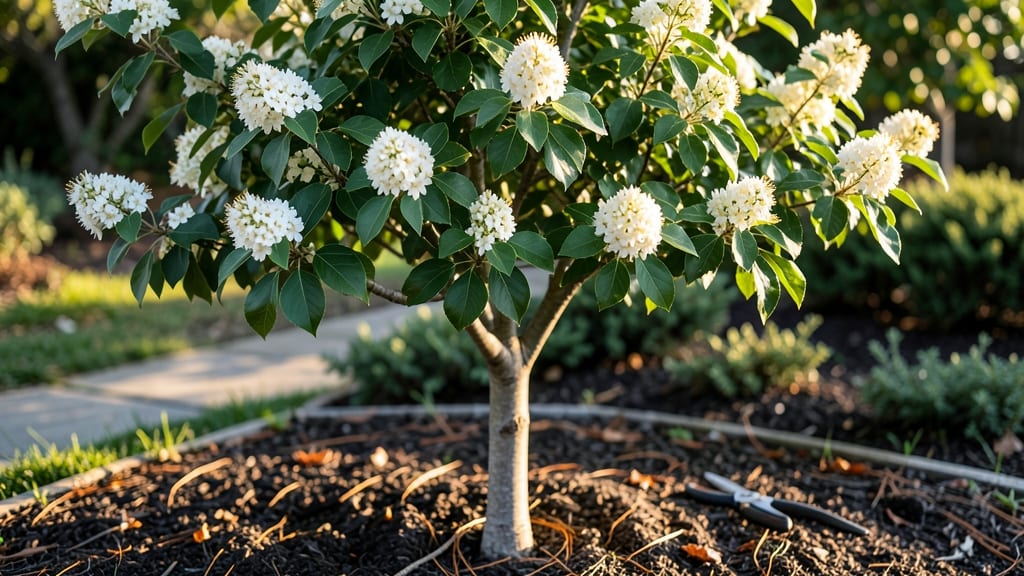
The delicate Pyrus calleryana flower bursts into fragrant white blooms each spring, turning my yard into a dreamy sanctuary—now the star of my landscape after just three years. 🌸 I planted mine three years ago, and now it’s the centerpiece of my landscape—disease-resistant, hardy, and blooming reliably from late April to early May.
The scent alone makes it worth growing, but the deep green foliage and brilliant fall colors keep it stunning year-round.
This tree thrives in full sun to partial shade and handles everything from urban pollution to deer browsing. Start with a 2-3 gallon container for young trees, or plant bare-root specimens in early spring when the soil warms.
Amend heavy clay soil with compost to improve drainage—this tree hates soggy roots. Once established, it needs almost no care beyond an annual pruning to shape it and remove dead wood.
By mid-summer, you’ll notice the glossy, disease-resistant leaves turning golden-yellow before dropping in fall, revealing striking exfoliating bark. The white flowers return year after year, attracting bees and butterflies while filling the air with a sweet, honey-like fragrance.
It’s the kind of tree that makes neighbors take notice—and ask for cuttings.
Perfect for small yards, urban streetscapes, or as a specimen tree in larger landscapes. Whether you’re a beginner or a seasoned gardener, this tree delivers low-maintenance beauty with minimal effort. Let’s get yours planted for next spring’s showstopping display.
📚 In This Guide
- What you need
- Instructions
- Tips and common mistakes
- Wrapping up and next steps
What you need
- ● Pyrus calleryana plants: Choose between: 1–3 saplings (fastest option, 3–5 ft tall, nursery-grown)
- ● Seeds (slower, requires stratification; buy 5–10 for better germination)
- ● Well-draining soil: Mix 3 parts native soil with 1 part compost (pH 6.0–7.0 ideal).
- ● Fertilizer: Balanced 10-10-10 (1 lb per tree) or organic options like fish emulsion.
- ● Mulch: 3–4 inches of wood chips (retains moisture, suppresses weeds).
- ● Hand trowel or spade (for digging holes).
- ● Garden gloves (to protect hands from thorns).
- ● Watering can or hose (with adjustable nozzle for gentle watering).
- ● Pruners (sharp, sterilized; for shaping or removing dead branches).
- ● Measuring tape (to ensure proper spacing: 20–30 ft apart for mature trees).
- ○ Staking kit (optional) if planting in windy areas (use 3 stakes per tree).
- ● Sunlight: Full sun (6+ hours daily); partial shade tolerated but reduces blooms.
- ● Climate: Hardy in USDA Zones 4–9 (survives -30°F!).
- ● Water source: Drip irrigation or hose access for 1–2 weeks post-planting.
- ● Patience: Trees take 3–5 years to flower fully but reward with fragrant white blooms!
Step-by-step guide to planting and caring for Pyrus calleryana
Here's the foolproof method I've used to establish healthy, fragrant Callery pear trees in tough climates.
🌱 Step 1: Select and Prepare the Planting Site
Callery pear thrives in full sun, so choose a location with at least 6-8 hours of direct sunlight daily. The tree tolerates a range of soil types but performs best in well-draining, slightly acidic soil with a pH between 6.0-7.0. If your soil is heavy clay, amend it with 2-3 inches of compost mixed into the top 12 inches of soil.
Dig a hole twice as wide as the root ball but no deeper. The top of the root ball should sit 1-2 inches above ground level—this prevents water from pooling around the trunk. Real talk: I've seen too many trees planted too deep, which leads to girdling roots and poor growth.
🪴 Step 2: Plant the Callery Pear Tree Properly
Gently remove the tree from its container and loosen any circling roots with your fingers—this encourages outward growth instead of root bound issues. Place the tree in the hole so the root flare (where roots meet trunk) is visible above the soil line. Backfill with native soil, tamping lightly every 2-3 inches to eliminate air pockets.
Create a 2-3 inch deep watering basin around the base and water deeply to settle the soil. The soil should feel moist 6 inches down after watering. Avoid compacting the soil too firmly—you want it to stay loose enough for roots to penetrate easily. Here's the thing—Callery pears hate soggy feet, so ensure proper drainage if your site has poor drainage.
☀️ Step 3: Establish Proper Watering and Mulching Routine
Water newly planted Callery pears 2-3 times per week for the first 4-6 weeks until the tree establishes new roots. You'll know it's time to reduce watering when you see new leaves emerge—that's your signal the roots have taken hold. After establishment, water only when the top 3-4 inches of soil feels dry.
Apply 2-3 inches of organic mulch (like wood chips or shredded bark) around the base, keeping it 3-4 inches away from the trunk to prevent rot. Replenish mulch annually to maintain moisture and suppress weeds. I always check mulch depth in spring—if it's broken down below 1 inch, it's time to refresh.
✂️ Step 4: Prune for Structure and Health
Prune your Callery pear in late winter or early spring before new growth begins. Remove any dead, diseased, or crossing branches first—these are the obvious culprits. Then shape the tree by selectively thinning branches to improve air circulation, which reduces disease risk. Aim to maintain an open canopy that allows sunlight to reach all parts of the tree.
Never remove more than 25% of the tree's foliage in one season. I learned this the hard way when I over-pruned a young specimen and it took two years to recover. Watch for water sprouts (suckers) that grow vertically from the trunk or branches—remove these promptly as they drain energy from the main structure.
Tips & tricks for perfect Callery pear planting
Took me years of trial and error to perfect these hardy trees—here's what actually makes the difference.
Sunlight Strategy: While 6-8 hours of sunlight is ideal, I've found that partial shade in hot climates (like afternoon sun protection) can actually extend the tree's lifespan and fragrance. The key is morning sun exposure—those first few hours are when photosynthesis really kicks into gear for Callery pears. If your site gets intense afternoon heat, consider planting near a building or taller trees that provide afternoon shade without blocking morning light.
Soil Science: That 6.0-7.0 pH range isn't just arbitrary—it's where Callery pears show their best disease resistance. If your soil test comes back outside this range, don't just add lime or sulfur without understanding the full picture. For acidic soils, I recommend a slow-release organic amendment like peat moss mixed into the top 12 inches. For alkaline soils, try elemental sulfur but apply it 3-4 months before planting to give it time to work properly. The difference in fragrance and leaf health is night and day.
Planting Depth: The 1-2 inches above ground level rule is critical, but here's what nobody tells you: Check the root flare after planting. It should be clearly visible above the soil line—this is where the roots transition to the trunk. If you bury it deeper than 2 inches, you're setting up girdling roots that can strangle the tree over time. I've seen too many nurseries sell trees with buried root flares that never recover. Use a small trowel to scrape away soil if needed to expose that crucial junction.
Watering Wisdom: Those first 4-6 weeks are make-or-break for root establishment. I recommend checking soil moisture every 2-3 days rather than relying on a schedule. Stick your finger 6 inches down—if it feels dry, water deeply. The goal is consistent moisture, not soggy soil. After establishment, let the top 3-4 inches dry out between waterings. This teaches the roots to seek water deeper in the soil, making your tree more drought-resistant over time.
Pro Tips for Pyrus Calleryana Flower
- Took me years of trial and error to perfect these hardy trees—here's what actually makes the difference.
- Sunlight Strategy: While 6-8 hours of sunlight is ideal, I've found that partial shade in hot climates (like afternoon sun protection) can actually extend the tree's lifespan and fragrance.
- Soil Science: That 6.0-7.0 pH range isn't just arbitrary—it's where Callery pears show their best disease resistance.
Frequently asked questions
Got questions about the stunning Pyrus calleryana flower? You’re not alone! Here are some of the most common queries—plus quick, practical answers to help you make the most of this hardy, fragrant tree.
When do Pyrus calleryana flowers bloom, and how long do they last?
The fragrant white blooms typically appear in late spring (April–May in most regions), just before the leaves unfurl. With proper care, they last 1–2 weeks, filling the air with a sweet, apple-like scent. For extended blooms, plant in full sun and ensure well-draining soil.
Is Pyrus calleryana cold-hardy? What zones does it tolerate?
This tree thrives in USDA Zones 4–8, making it one of the most resilient choices for northern climates. It handles snow, ice, and even urban pollution—perfect for city landscapes or rural yards alike. Just avoid waterlogged soil in winter.
Are there any downsides to growing Pyrus calleryana?
While disease-resistant, some gardeners note aggressive root systems or self-seeding (if not pruned). To mitigate:
- Plant in contained spaces (e.g., large pots for urban areas).
- Remove seed pods before they split to prevent unwanted saplings.
- Monitor for fire blight (rare but possible)—prune infected branches immediately.
Can I grow Pyrus calleryana in containers? What’s the best size?
Yes! This tree adapts well to large containers (20+ gallons), but expect slower growth. Use a fast-draining mix (e.g., 60% potting soil, 30% perlite, 10% compost) and repot every 3–4 years. Pro tip: Elevate pots to improve drainage and prevent root rot.
What’s the difference between Pyrus calleryana and Bradford pear?
While both are Callery pear varieties, Bradford pears (P. calleryana ‘Bradford’) are less fragrant and more prone to branch dieback. Pyrus calleryana (species) offers:
Prune in late winter or early spring (before buds swell) to:
For fragrance and reliability, the species wins!
How do I prune Pyrus calleryana to encourage more flowers?
Bonus: Light pruning after blooming can redirect energy to next year’s flowers!
Wrapping up and next steps
Pyrus calleryana isn’t just a tree—it’s a fragrant, resilient powerhouse that brings beauty and low-maintenance charm to any landscape. 🌿 Whether you’re drawn to its delicate blooms, disease resistance, or year-round appeal, this hardy tree proves that stunning gardens don’t require constant upkeep. Ready to elevate your outdoor space? Start by choosing the perfect spot—whether it’s a sunny yard, urban patio, or even a large container—and watch your garden transform with effortless elegance!