
Light Requirements
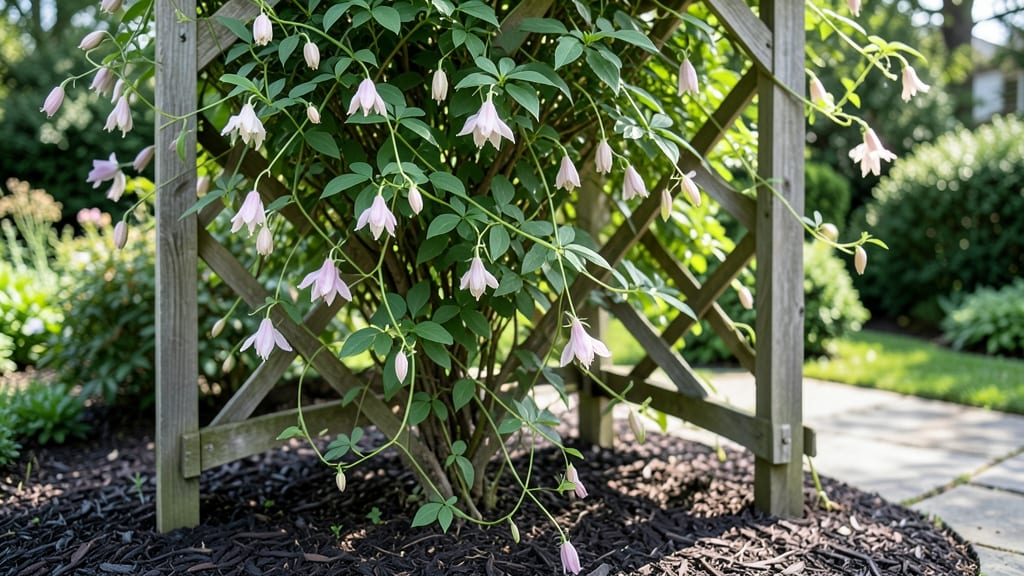
Shade-loving climbing flowering vines turn dull corners into lush vertical gardens—no direct sun required. 🌿 I’ve transformed my shady patio into a fragrant canopy using clematis and morning glories, and the results are shockingly vibrant.
These vines thrive where others fail, draping elegantly over trellises or pergolas while requiring minimal fuss.
The secret lies in pairing the right plants with sturdy support structures. A 6-foot trellis works wonders for clematis, while morning glories cling happily to wire cages.
Both need well-draining soil and occasional pruning to encourage bushier growth. The payoff? Year-round interest with minimal maintenance—just water and occasional deadheading to keep blooms coming.
You’ll end up with a living tapestry of color, even in shady spots. Imagine deep purple clematis blooms cascading alongside delicate morning glory stars, all while keeping your space cooler in summer. These vines also attract pollinators, making your garden work harder for you. Let’s get your vertical garden growing!
Works for balconies, arbors, or even fences—anywhere you want to add drama without sunlight. The key is choosing vines that match your shade level, from dappled light to deep shade. Start small, then expand as you see what thrives best in your space.
📚 In This Guide
- What you need
- Instructions
- Tips and common mistakes
- Wrapping up and next steps
What you need
- ● Shade-tolerant climbing vines: 1–3 plants of Clematis (e.g., Clematis montana or Clematis armandii)
- ● 1–2 plants of Hoya (e.g., Hoya carnosa or Hoya kerrii)
- ● 1–3 plants of Passiflora (e.g., Passiflora caerulea)
- ● 1–2 plants of Actinidia (e.g., Actinidia kolomikta)
- ● Support structures: 1–2 trellises, arbors, or pergolas (6–10 ft tall, sturdy metal or wood)
- ● OR 1–2 strong fences or walls (for vines to cling to naturally)
- ● Potting supplies (if container gardening): 2–4 large containers (15–20 gallons each, with drainage holes)
- ● High-quality well-draining potting mix (e.g., 60% peat/compost, 30% perlite, 10% sand)
- ○ Soil amendments (optional but helpful): Compost or worm castings (1–2 gallons per plant)
- ● Slow-release organic fertilizer (e.g., 10-10-10 or 5-5-5)
- ● Garden trowel or shovel
- ● Pruning shears (sterilized)
- ● Gloves (to protect your hands from thorns or rough vines)
- ● Watering can or hose with a gentle spray nozzle
- ● Measuring tape (for spacing plants 3–6 ft apart)
- ● Mulch (e.g., shredded bark or straw, 2–3 inches thick)
- ○ Optional: Trellis attachment hardware (e.g., zip ties, screws, or hooks)
- ● 🔹 Location: Partial to full shade (dappled sunlight or <6 hours of direct sun/day)
- ● 🔹 Moisture: Well-draining soil (vines hate soggy roots!)
- ● 🔹 Patience: Some vines (like Clematis) take 1–2 years to fully establish and bloom
- ● 🔹 Seasonal prep: Plant in spring or early fall for best root growth
Step-by-step guide to establishing a thriving vertical vine canopy
Here's how to create a lush, year-round vertical garden using shade-tolerant climbers.
🌱 Step 1: Select and Prepare Your Vine Supports
Choose sturdy vertical structures like trellises, arbors, or obelisks that can support the mature weight of your vines. I recommend metal or thick wooden frames for durability—especially if you're planting heavy varieties like clematis or wisteria. Install your support structure in a location that receives dappled shade to partial shade (2-6 hours of filtered sunlight daily). The structure should be positioned where it won't cast harsh shadows on other plants below.
For four plants, you'll need at least four individual supports spaced 3-4 feet apart to allow proper air circulation. If using a single large trellis, ensure it's at least 6 feet tall to accommodate mature vine growth. Here's the thing—shade-loving vines need vertical space to thrive, so don't skimp on height. I always add horizontal crossbars every 2 feet to encourage upward growth and provide more surface area for flowers.
🌿 Step 2: Amend Soil for Optimal Root Development
Shade-loving vines appreciate well-draining, moisture-retentive soil with plenty of organic matter. Before planting, mix 2-3 inches of compost into the top 12 inches of soil around your support structure. This improves both drainage and nutrient availability—critical for vines that may struggle in dense, compacted ground. I like to add a handful of slow-release organic fertilizer (like 10-10-10) to the planting hole itself to give roots an immediate nutrient boost.
For container-grown vines, use a high-quality potting mix blended with 30% perlite or orchid bark to prevent root rot. The key here is air pruning—roots need oxygen, and heavy clay soil suffocates them. If your soil is naturally heavy, consider planting in large fabric grow bags (at least 18 inches deep) for better drainage control. Water the amended soil thoroughly 24 hours before planting to help roots establish more easily.
☀️ Step 3: Plant Vines at the Right Depth and Spacing
Dig a hole twice as wide as the root ball but only as deep as the container—planting too deep can suffocate the stem and cause rot. Gently remove the vine from its container and loosen any circling roots with your fingers. This encourages outward growth rather than girdling, which can strangle the plant as it matures. Place the vine in the hole so the top of the root ball sits level with the surrounding soil—never bury the stem crown.
For four plants, space them 4-6 feet apart along your support structure. This gives each vine room to establish without competing for sunlight or nutrients. If planting fast-growing varieties like honeysuckle, space them 6 feet apart to prevent overcrowding. After backfilling the hole, water deeply to settle the soil and eliminate air pockets. Press the soil gently around the base—just enough to remove gaps but not so firmly that you compact the roots.
💧 Step 4: Train Vines and Maintain Consistent Moisture
As soon as your vines show new growth (3-4 inches tall), begin gently tying them to the support structure with soft plant ties or twine. Avoid metal or plastic ties that can cut into stems as they thicken. I like to weave vines through the crossbars rather than wrapping them tightly—this encourages natural climbing habits and reduces stress on the plant. Prune any weak or leggy growth early to promote bushier, stronger stems.
Shade-loving vines need consistent moisture but hate soggy roots. Water deeply once a week (or more often in hot weather) until the soil is 6 inches deep and damp. You'll know it's right when water drains freely from the bottom of the hole or container. Mulch around the base with 2-3 inches of shredded bark or wood chips to retain moisture and suppress weeds. Here's the thing—mulch also keeps roots cool in summer, which is especially important for shade-loving varieties that can scorch in sudden heat spikes.
✂️ Step 5: Prune for Year-Round Blooms and Structure
Most shade-loving flowering vines bloom on new wood, so light pruning in early spring encourages vigorous regrowth. Cut back last year's growth by one-third to open the plant's center to light and air. For clematis, remove dead or crossing branches first—this prevents disease and improves airflow. I always prune just above a leaf node (the bump where leaves and stems meet) to encourage new shoots to grow from there.
In late summer, give your vines a second light pruning to remove spent flowers and encourage a fresh flush of blooms before fall. This is also the time to shape the vine along your support structure. If any stems grow too long or flop, trim them back to half their length. The goal is to maintain an open, airy structure—this prevents fungal diseases and makes it easier to harvest flowers or enjoy the foliage. With consistent care, your vertical vine canopy will reward you with year-round interest, from spring blossoms to autumn foliage.
Tips & tricks for perfect vertical vine canopy gardens
Here's what nobody tells you—these are the details that turn good vine gardens into stunning vertical displays.
Support Structure Stability: When installing your 4 individual supports or single trellis, bury the base 6-8 inches deep and stake it with 2x4-inch wooden stakes at 45-degree angles for extra wind resistance. I learned this the hard way after watching a trellis collapse under heavy wisteria blooms. For heavy varieties like clematis, consider using metal trellis frames with concrete footings—they're more expensive upfront but last decades without maintenance. The 2-foot crossbars you add should be secured with galvanized screws, not just tied, to prevent shifting as vines grow.
Soil Amendment Hack: The 2-3 inches of compost mixed into 12 inches of soil is non-negotiable for shade-loving vines, but here's the upgrade: add 1 cup of worm castings to each planting hole. Worm castings contain beneficial microbes that help roots absorb nutrients more efficiently, especially in shaded conditions where photosynthesis is limited. For container plants, blend 20% coconut coir into your potting mix—it retains moisture better than perlite alone while preventing compaction. The 24-hour pre-watering before planting is crucial; it helps settle the amended soil and prevents air pockets that can suffocate young roots.
Pruning Precision: When doing your one-third spring pruning, focus on removing branches that grow inward or cross each other. These compete for sunlight and create dense, disease-prone centers. For clematis specifically, look for 3-4 strong outward-facing stems to keep—these will produce the most flowers. In late summer, when shaping, make cuts at a 45-degree angle just above a leaf node. This creates a natural water-shedding surface that reduces rot risk. I always sterilize my pruners with rubbing alcohol between cuts to prevent spreading fungal spores.
Watering Wisdom: The 6-inch deep dampness guideline is perfect, but here's how to test it properly: insert a wooden dowel into the soil—if it comes out clean with minimal soil clinging, you're good. If it's completely dry, water again. For container plants, check moisture by lifting the pot—if it feels light, it's time to water. The 2-3 inches of mulch should be refreshed every spring, as it breaks down over time. Pro tip: use cedar mulch—it naturally repels pests while keeping roots cool.
Pro Tips for Shade Loving Climbing Flowering Vines
- Here's what nobody tells you—these are the details that turn good vine gardens into stunning vertical displays.
- Support Structure Stability: When installing your 4 individual supports or single trellis, bury the base 6-8 inches deep and stake it with 2x4-inch wooden stakes at 45-degree angles for extra wind resistance.
- Soil Amendment Hack: The 2-3 inches of compost mixed into 12 inches of soil is non-negotiable for shade-loving vines, but here's the upgrade: add 1 cup of worm castings to each planting hole.
Frequently asked questions
about shade-loving climbing flowering vines—because every gardener deserves a little clarity! Here are answers to the top questions to help you grow your dream vertical garden.What are the best shade-tolerant vines for small spaces?
If you’re working with limited room, opt for compact varieties like Clematis montana (dwarf types) or Hoya carnosa. Both thrive in partial shade, climb gracefully, and produce stunning blooms without overwhelming your space. For a tropical touch, Philodendron hederaceum (heartleaf) is a fast-growing, low-maintenance alternative.
How long does it take for these vines to flower?
Most shade-loving vines take 1–3 years to establish and bloom, depending on the species. For example, Clematis may flower in its second year, while Hoya varieties can take longer but reward you with fragrant blooms. Patience is key—provide consistent care (water, support, and occasional fertilizer) to speed up the process!
Do I need trellises or can I use other supports?
While trellises are classic, you can also use arbors, pergolas, fences, or even sturdy branches as supports. For heavy vines like Clematis, opt for a strong, lattice-style trellis to prevent sagging. Hoya and Philodendron are lighter and can thrive on simple wire mesh or hanging baskets.
How do I keep shade vines healthy in humid climates?
Humidity can invite pests like spider mites or fungal issues. To combat this:
- Improve airflow by pruning crowded growth.
- Avoid overhead watering—water at the base instead.
- Use fungicide spray (neem oil works well) if you spot mildew.
- Choose disease-resistant varieties like Clematis ‘Jackmanii’ or Hoya obovata.
Can I grow these vines in containers?
Yes! Many shade-loving vines thrive in large pots (15+ gallons) with drainage holes. Use a well-draining potting mix (add perlite or orchid bark for aeration) and a slow-release fertilizer to support root growth. Hoya and Philodendron are especially container-friendly—just rotate the pot occasionally for even light exposure.
Wrapping up and next steps
Transforming your shady spaces into a lush, blooming paradise is easier—and more rewarding—than you think! 🌿 With the right shade-loving climbing flowering vines, you can create a stunning vertical garden canopy that thrives year-round.
Whether you’re a seasoned gardener or just starting out, these resilient plants offer beauty, texture, and even fragrance without demanding full sun.
Ready to take the next step? Start small—pick one vine to experiment with, gather your supplies, and let nature do the rest. Before you know it, your patio, fence, or trellis will be draped in vibrant blooms, turning even the shadiest corners into a serene, floral oasis.
Happy gardening! 🌸