
Planting
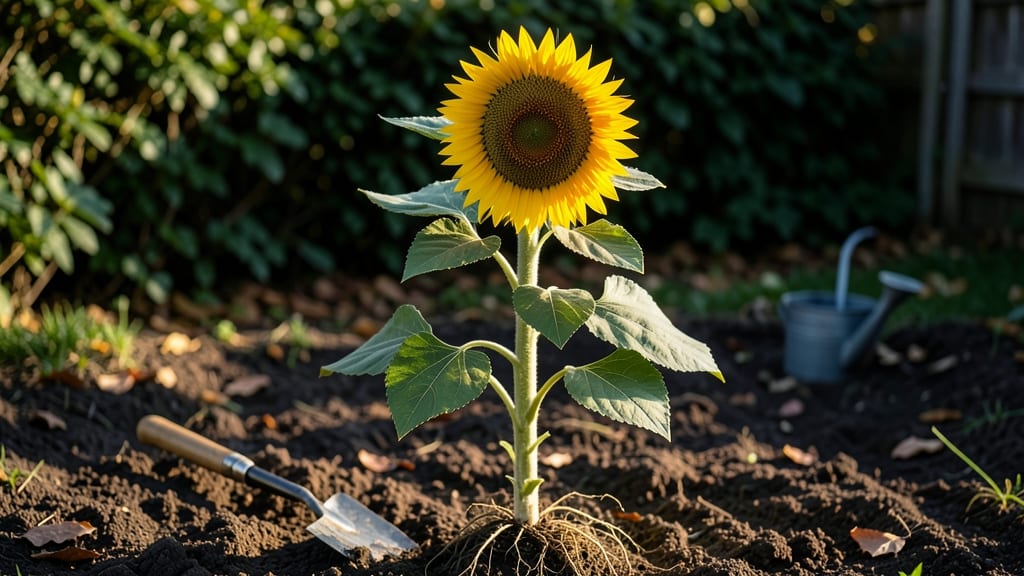
Understanding the sunflower root system is the secret to growing plants that reach for the sky—literally. Those towering stalks need roots that dive deep, not just spread wide, and getting this right means the difference between a floppy 3-footer and a 12-foot giant.
I learned the hard way when my first sunflowers leaned like drunks because their roots couldn’t anchor properly in shallow soil.
Sunflower roots grow 3-5 feet deep, with a single taproot that thickens as the plant matures, while secondary roots branch out like fingers to grab nutrients. This deep system explains why they thrive in loose, well-drained soil—it lets those roots stretch without hitting compacted layers.
The key to mimicking nature? Loosen the soil 18-24 inches before planting, and space seeds 6-12 inches apart so roots don’t compete.
📚 In This Guide
- What you need
- Instructions
- Tips and common mistakes
- Wrapping up and next steps
What you need
- ● Sunflower seeds: Choose heirloom or hybrid varieties (e.g., 'Russian Giant' or 'Autumn Beauty')—50–100 seeds depending on your space.
- ● Well-draining soil: Mix 60% garden soil, 30% compost, and 10% perlite or sand for aeration (sunflowers hate soggy roots!).
- ● Fertilizer: Balanced 10-10-10 fertilizer (1 tbsp per plant at planting).
- ● Phosphorus-rich fertilizer (e.g., bone meal, 1 tbsp per hole) to boost root growth.
- ● Watering can or hose: With a gentle spray nozzle to avoid displacing soil.
- ● Garden trowel or shovel: For digging planting holes 1–2 inches deep and 12–18 inches apart (spacing matters for root spread!).
- ○ Mulch (optional but recommended): 2–3 inches of straw or wood chips to retain moisture and regulate soil temp.
- ● Root stimulator: A mycorrhizal fungus powder (1 tsp per hole) to encourage symbiotic root growth.
- ● Soil moisture meter: To track hydration—sunflower roots love consistent moisture but hate waterlogging.
- ● Stakes or cages: For tall varieties (7+ feet), use 3–4 ft bamboo stakes to support stems as they grow.
- ● pH test kit: Aim for 6.0–7.5 pH; amend with lime (to raise pH) or sulfur (to lower) if needed.
Understanding and cultivating the sunflower root system for maximum growth
Sunflowers thrive when their roots run deep—here's how to nurture that foundation.
Prepare the Soil for Deep Root Penetration
Sunflower roots can extend 4-6 feet deep, so start with soil that won’t resist their growth. Loosen the top 12-18 inches of soil using a broadfork or tiller—this breaks up compacted layers where roots often struggle. I like to work in compost or aged manure at this stage to improve drainage and nutrient availability. Avoid heavy clay soils unless amended; roots need oxygen to expand.
Test the soil’s moisture retention by squeezing a handful—it should hold together but not be sticky. If it’s too dense, mix in sand or perlite to create air pockets. Sunflowers hate waterlogged roots, so prioritize soil that drains freely while retaining enough moisture for deep penetration.
Plant Seeds at the Correct Depth and Spacing
Sow seeds 1 inch deep—any deeper delays germination as the seedling struggles to reach the surface. Space seeds 6-12 inches apart in rows 2-3 feet apart to give roots room to spread without competing. Thin seedlings to the strongest 4-6 inches tall to avoid overcrowding, which stunts root development.
Here’s the thing—sunflower roots grow fastest when they’re not disturbed. Once planted, avoid digging near the base; even gentle disturbance can damage the taproot. If you’re growing in containers, choose pots at least 18 inches deep to accommodate the root’s vertical growth.
Water Strategically to Encourage Deep Root Growth
Water deeply once or twice a week, aiming for 1-2 inches of moisture per session. Shallow watering encourages shallow roots, which weakens the stalk. I use a soaker hose to deliver water slowly at the base, avoiding wetting the foliage—this prevents fungal diseases that thrive in damp leaves.
Check moisture by digging 6 inches deep with a trowel; the soil should feel damp but not soggy. If the top inch dries out between waterings, increase frequency slightly, but never let the soil dry completely. Mulch with 2-3 inches of straw or wood chips to retain moisture and regulate soil temperature.
Monitor and Support the Developing Root System
Sunflowers show root health through their stems—strong, upright stalks indicate deep, stable roots. If stems lean or bend, the roots may not be anchoring properly. Stake tall varieties early (when 12-18 inches tall) to prevent wind damage, which can stress the root system.
Real talk: Over-fertilizing with nitrogen-rich feeds can lead to lush foliage but weak roots. Instead, use a balanced fertilizer (10-10-10) sparingly—too much nitrogen diverts energy from root development. Watch for yellowing lower leaves; this often signals root stress or nutrient imbalance.
Maintain Soil Health for Long-Term Root Vigor
As the season progresses, top-dress the soil with compost or well-rotted manure to replenish nutrients. Sunflowers are heavy feeders, and their roots will benefit from consistent organic matter. Avoid synthetic fertilizers late in the season—they can encourage late growth that won’t harden off before frost.
By late summer, you’ll see the payoff: a thick, fibrous root system that supports a towering stalk. If you’re growing sunflowers in containers, consider deep-root fertilizers like fish emulsion to encourage downward growth. The deeper the roots, the taller—and more stable—the plant will be.
Tips & tricks for cultivating a strong sunflower root system
Mastering the art of deep-rooted sunflowers transforms your garden from ordinary to extraordinary. Here’s how to elevate your sunflower cultivation game with insider knowledge.
Soil Preparation Insight: When loosening the top 12-18 inches of soil in Step 1, focus on breaking up any hardpan layers that might restrict root expansion. I’ve found that using a broadfork in dry soil first, then watering, makes the process significantly easier. The goal is to create a crumbly texture that mimics the natural aeration roots crave. This preparation is especially critical in clay-heavy soils where roots often suffocate.
Seed Depth and Germination Strategy: The 1-inch planting depth in Step 2 is non-negotiable for quick germination, but here’s the secret: pre-soak your seeds for 6-8 hours before planting. This jumpstarts the germination process and gives you a head start on establishing that critical taproot. Just be sure to plant immediately after soaking—they’ll be ready to sprout fast.
Watering Technique Refinement: While the instructions call for 1-2 inches of water per session, timing matters just as much. I’ve learned that early morning watering (before 8 AM) minimizes evaporation and allows roots to absorb moisture throughout the day. The 6-inch moisture check is brilliant—it forces you to water where the roots actually are, not just the surface.
Container Cultivation Tip: For those growing in containers, the 18-inch minimum depth is essential, but don’t stop there. Add a layer of coarse gravel at the bottom of your pot before adding soil. This creates drainage channels that encourage roots to grow downward rather than circling at the bottom—a common problem in container gardening. I’ve seen sunflowers in shallow pots with inadequate drainage produce stalks that wilt dramatically in heat.
Pro Tips for Sunflower Root System
- Mastering the art of deep-rooted sunflowers transforms your garden from ordinary to extraordinary.
- Soil Preparation Insight: When loosening the top 12-18 inches of soil in Step 1, focus on breaking up any hardpan layers that might restrict root expansion.
- Seed Depth and Germination Strategy: The 1-inch planting depth in Step 2 is non-negotiable for quick germination, but here’s the secret: pre-soak your seeds for 6-8 hours before planting.
Frequently asked questions
Got questions about sunflower roots? You’re not alone—this deep, complex system can be tricky to understand! Below, we’ve rounded up the most common queries gardeners and farmers ask about sunflower root systems, from planting tips to troubleshooting.
How deep do sunflower roots actually grow?
Sunflower roots can extend 6 to 10 feet deep (or even deeper in loose, well-drained soil) to access water and nutrients. Their primary taproot anchors the plant, while secondary lateral roots spread horizontally. In compacted or clay-heavy soil, roots may grow shallower, so amending soil with compost helps!
When do sunflower roots start developing?
Roots begin forming within 24–48 hours of germination, with the taproot leading the way. By 2–3 weeks, lateral roots start branching out. If seedlings struggle to emerge, check soil moisture—dry conditions can stall early root growth. A light watering after planting (but before sprouting) encourages healthy development.
What’s the best soil temperature for sunflower root growth?
Sunflower roots thrive in soil temperatures between 60°F and 90°F (15°C–32°C). Cooler soils (<50°F/10°C) slow root development, while extreme heat (>95°F/35°C) can stress the plant. Use black plastic mulch or row covers early in the season to warm the soil and give roots a head start.
Why are my sunflower roots rotting or mushy?
Mushy, discolored roots are often a sign of overwatering, fungal diseases (like Fusarium or Phytophthora), or poor drainage. To fix it:
- Ensure soil drains well—sunflowers hate soggy roots!
- Space plants 12–18 inches apart for airflow.
- Rotate crops if fungal issues persist (don’t replant sunflowers in the same spot yearly).
Can I grow sunflowers in containers? How does that affect the root system?
Yes! Dwarf varieties (like ‘Teddy Bear’ or ‘Moulin Rouge’) thrive in 5-gallon containers or larger, but their roots will be shallower and more compact than field-grown plants. Use a well-draining potting mix and fertilize regularly. For taller varieties, opt for at least a 10–15-gallon pot and stake the plant as it grows.
What are some sunflower root system alternatives for small gardens?
If space is limited, try these root-friendly alternatives:
- Dwarf sunflowers: Varieties like ‘Sunspot’ (12–18” tall) have smaller root systems.
- Intercropping: Plant sunflowers alongside shallow-rooted crops (e.g., beans or lettuce) to share nutrients.
- No-till gardening: Preserves soil structure, helping roots penetrate easily.
Wrapping up and next steps
Understanding the sunflower root system is your secret weapon for cultivating thriving, towering plants! 🌱 With deep taproots and fibrous secondary roots, sunflowers anchor themselves for stability and nutrient access—key to their impressive growth.
Whether you're a seasoned gardener or just starting, these insights will empower you to nurture healthier, more resilient sunflowers.
Ready to put your newfound knowledge into action? Start by selecting the right soil and location, then experiment with companion planting or organic fertilizers to boost root development. Happy growing—your sunflowers will thank you with breathtaking blooms! 🌻