
Lawn
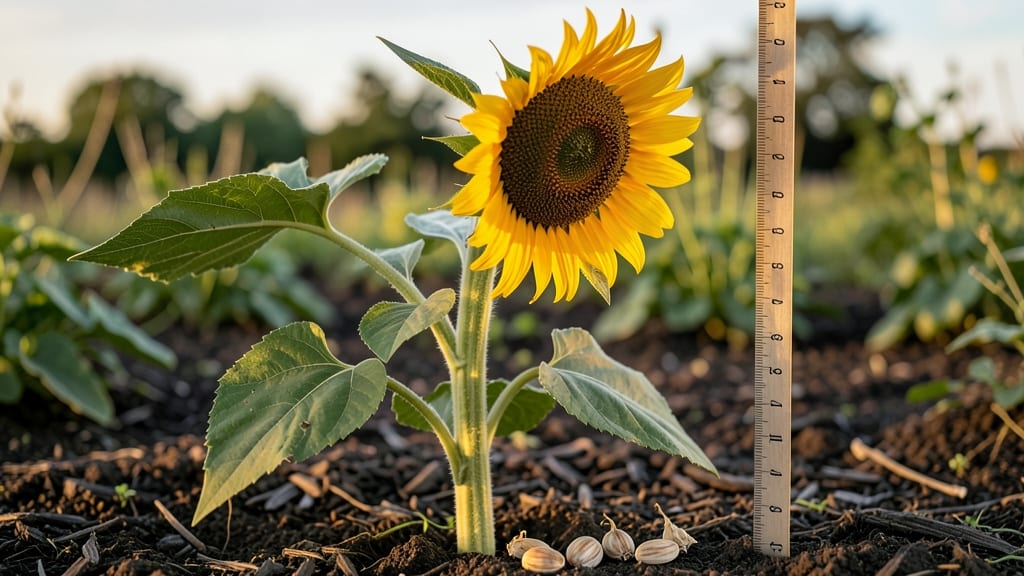
A sunflower seed identification chart is your first step to picking the perfect variety—whether you dream of 6-foot giants or space-saving 3-foot beauties. 🌻 I’ve grown everything from towering monsters to bushy beauties, and the difference in care (and harvest) is huge.
Some varieties need full sun and deep soil, while others thrive in containers or lean toward edible seeds instead of showy petals.
The key traits to compare are height, bloom time, and seed type—dwarf varieties like 'Teddy Bear' mature in 80 days, while Mammoth types take 120 days to reach their full 12-foot glory.
Edible oil varieties like 'NuSun' stay compact but pack flavor, while ornamental types like 'Russian Giant' demand space and sturdy stakes. Knowing these details upfront saves you from overcrowding or disappointment.
Once you’ve matched a variety to your garden, you’ll see bold, cheerful blooms that attract pollinators and add drama to any space. The right choice also means fewer pests (taller varieties resist slug damage better) and easier harvesting—whether you’re pressing seeds for bird feed or toasting them for snacks.
This guide makes it simple to pick the perfect match.
We’ll cover visual cues (leaf shape, stem thickness) and cultivation quirks (like how some varieties need trellises) so you can spot your seeds with confidence. No more guessing which packet will work—just a clear, practical way to choose what grows best for you.
📚 In This Guide
- What you need
- Instructions
- Tips and common mistakes
- Wrapping up and next steps
What you need
- ● Sunflower seeds (various types): Gather at least 5–10 different varieties (e.g., oil-type, confectionery, or birdseed types) for comparison. Aim for 50–100 seeds total to ensure a diverse sample.
- ● Magnifying glass (10x–20x magnification): Essential for inspecting fine details like seed coat texture, striations, or tiny markings.
- ● Ruler or caliper: Measures seed length/diameter (precision: 0.01 inches or 0.25 mm for accuracy).
- ● White or light-colored background: Use a 12"x18" sheet of poster board or a white tray to photograph seeds against a neutral backdrop.
- ○ Digital camera or smartphone: High-resolution (12MP+) with macro mode for close-up shots. A ring light (optional but helpful) improves clarity.
- ● Labeling supplies: Acid-free labels or sticky notes
- ● Fine-tip black marker
- ● Pencil for temporary notes
- ● Reference guides: Print or digital copies of sunflower seed databases (e.g., from the blank">USDA or seed catalogs) for trait verification.
- ● Seed dissection kit: Includes a scalpel, tweezers, and petri dish for examining internal structures (e.g., embryo shape).
- ● Color swatch chart: Pantone or digital color picker app to match seed coat hues precisely.
- ● Drying rack: Paper towels or a wire mesh tray to air-dry seeds uniformly before photography.
- ● Software: Free tools like blank">Canva or Photoshop to annotate images.
- ● Field notebook: For jotting down observations like germination rates, regional origins, or seed weight.
How to identify sunflower seed varieties using key traits
Mastering sunflower seed identification transforms your garden from guesswork to precision.
🌱 Step 1: Examine Plant Height and Growth Habit
Sunflower varieties fall into two broad categories: dwarf (under 4 feet) and standard (over 5 feet). I always start by measuring the mature plant from base to flower head—this instantly narrows options. Dwarf varieties like 'Teddy Bear' stay compact, perfect for containers, while standard types like 'Russian Giant' tower dramatically.
Growth habit matters too. Some varieties grow single-stemmed with one main flower, while others branch out into multi-stemmed clusters. The branching type often correlates with seed production—multi-stemmed plants yield more seeds per square foot. Watch how the plant spreads; this trait is visible even in young seedlings.
🌿 Step 2: Analyze Flower Head Shape and Size
Flower head diameter is your next clue. Single-head varieties produce one large bloom (typically 8-12 inches across) like 'Autumn Beauty,' while prolific types like 'Mammoth' bear multiple smaller heads. I measure from the outer edge of one petal to its opposite—this gives a precise reference point.
Petal color also matters. Classic yellow is universal, but varieties like 'Evening Sun' feature reddish-brown centers, and 'Presto' sports bicolor petals. The center disc's texture varies too—some are smooth, others rough and spiky. Run your fingers over the disc when dry; the roughness indicates seed-bearing potential.
☀️ Step 3: Study Seed Head Characteristics
Once flowers fade, the seed head's structure reveals variety. Conical heads (like 'Russian Giant') hold seeds tightly packed in a narrow shape, while flat-topped heads (like 'Sunspot') spread seeds more loosely. I always check seed density—tighter clusters mean fewer seeds per head but larger individual seeds.
Seed color provides final confirmation. Most are grayish-brown, but 'Russian Mammoth' produces black-striped seeds, and 'Autumn Beauty' yields striped seeds in shades of gray and black. Hold the seed head against a white background to spot subtle patterns—this is where identification gets exciting.
⏰ Step 4: Note Maturity Timeline and Seed Production
Varieties mature at different rates. Early-season types like 'ProCut' reach seed readiness in 75-85 days, while late-season giants like 'Mammoth' take 120+ days. I track days from germination to seed maturity—this helps predict harvest windows in your climate.
Seed production volume varies wildly. Dwarf varieties like 'Sunspot' yield 50-100 seeds per head, while standard types like 'Russian Giant' produce 200+ seeds per head. Weigh a sample of seeds—heavier seeds (like those from 'Mammoth') indicate larger, more viable specimens. This is how I determine which varieties to grow for bird feed or culinary use.
Tips & tricks for mastering sunflower seed identification
Once you start looking closely, sunflowers reveal their secrets like nature's own fingerprint—here's how to spot the details that make each variety unique.
Height as Your First Clue: The 4-foot height cutoff between dwarfs and standards is your starting point, but don't stop there. Measure from the base of the stem to the flower head's center—this gives you a precise reference. I've found that dwarf varieties like 'Teddy Bear' often grow just 2-3 feet tall, while true giants can exceed 12 feet! This measurement helps distinguish between similar-looking varieties that might otherwise blend together in a garden.
Seed Head Texture Reveals Potential: In Step 3, when examining seed heads, pay special attention to the disc texture—rough discs like those on 'Russian Giant' indicate higher seed production potential. I've noticed that smoother discs often produce fewer but larger seeds, while rougher discs yield more abundant but slightly smaller seeds. This texture clue helps predict which varieties will be best for seed harvesting or bird feed production.
Petal Color Patterns: The subtle color variations in petals and centers can be your most reliable identifier. For example, 'Evening Sun' shows distinct reddish-brown centers that set it apart from standard yellow varieties. I always examine petals under bright light or against a white background to spot these subtle patterns. This is where the real excitement of sunflower identification happens—each variety has its own unique color signature.
Maturity Timeline Tracking: The 75-85 day range for early varieties and 120+ days for giants isn't just about patience—it's about planning. I've learned to track germination dates and count days to maturity to predict when each variety will be ready for harvest. This helps me organize my garden layout so I can harvest seeds at different times throughout the season, extending my seed collection period.
Pro Tips for Sunflower Seed Identification Chart
- Once you start looking closely, sunflowers reveal their secrets like nature's own fingerprint—here's how to spot the details that make each variety unique.
- Height as Your First Clue: The 4-foot height cutoff between dwarfs and standards is your starting point, but don't stop there.
- Seed Head Texture Reveals Potential: In Step 3, when examining seed heads, pay special attention to the disc texture—rough discs like those on 'Russian Giant' indicate higher seed production potential.
Frequently asked questions
Got questions about identifying sunflower seeds? You’re not alone! Here are some of the most common queries—plus quick answers to help you navigate your sunflower seed adventure like a pro.
What are the key differences between black oil, striped, and confection sunflower seeds?
Black oil sunflower seeds are small, dark, and high in oil (great for birds and cooking). Striped seeds (like Mammoth) are medium-sized with black-and-white stripes and are ideal for snacking or roasting. Confection seeds are large, white, and striped—perfect for eating raw or in salads. Check the chart for visual comparisons!
How long does it take to identify sunflower seeds from a plant?
You can identify seeds by their size, color, and shell texture as soon as they mature (about 90–120 days after planting). For a definitive ID, harvest fully dried seeds (when the back of the seed is white) and compare them to your sunflower seed identification chart. Patience pays off—waiting ensures accuracy!
Can I use a sunflower seed identification chart for wild sunflowers?
While cultivated varieties (like Russian Mammoth) are easier to ID, wild sunflowers (e.g., Helianthus annuus) can also be matched using the chart. Focus on seed size, shell patterns, and plant height. Pro tip: Wild seeds may vary slightly, so cross-reference with local flora guides if needed.
What if my seeds don’t match the chart? Are they still edible?
Most sunflower seeds are edible, but mismatches might mean hybrid varieties or wild types. If unsure, taste-test a small amount (roasted seeds are safer). For non-edible seeds (like those from ornamental sunflowers), use them for bird feed or compost. When in doubt, compare traits or consult a local gardening expert!
How do I store identified seeds for planting later?
Store seeds in a cool, dry place (like a sealed jar in the fridge) for up to 2 years. Label them with the variety and date! For long-term storage, add a silica gel packet to absorb moisture. Don’t refrigerate if your seeds are already dry—humidity is the enemy!
Wrapping up and next steps
Mastering sunflower seed identification opens the door to growing vibrant blooms and thriving gardens! 🌻 With this sunflower seed identification chart, you’ve got the tools to spot key traits—from hull color to leaf shape—like a pro.
Whether you’re a seasoned gardener or just starting out, confidence in seed selection leads to stunning results.
Ready to take the next step? Grab your chart, pick your favorite varieties, and plant with purpose! Your future sunflower patch awaits—happy growing! 🌱