
Flowers
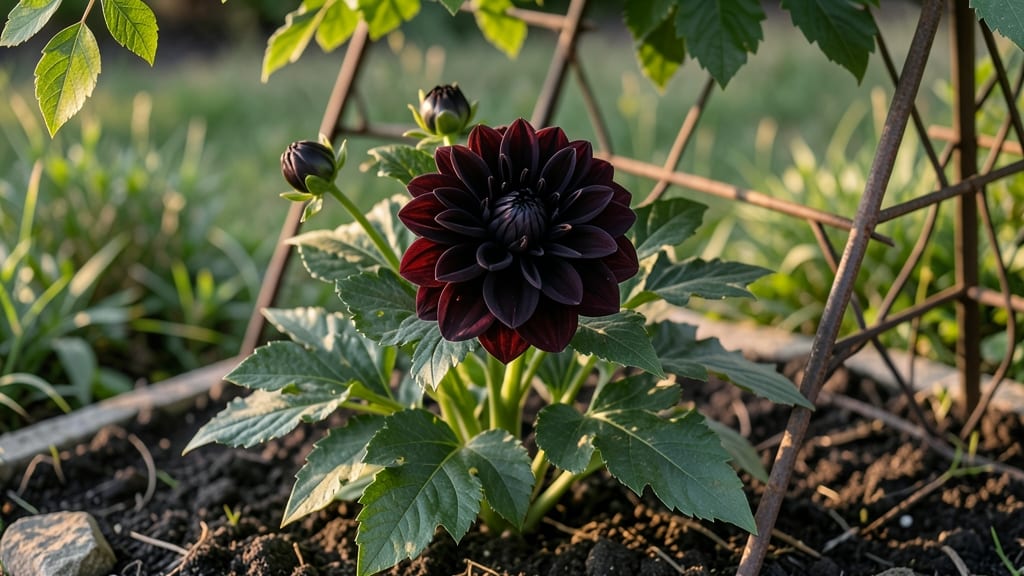
Growing the black dahlia flower transforms your garden into a moody masterpiece—those velvety, near-black blooms stand out like midnight against any backdrop. I’ve grown them for years, and the secret isn’t just the dramatic flowers but the year-round blooms when you follow the right care routine.
The first time I saw one unfurl in my late-summer garden, I knew I’d never go back to lighter varieties.
Black dahlias thrive with full sun and rich, well-draining soil—think compost mixed into the bed before planting. They’re not fussy about soil type, but they do demand consistent moisture (never soggy) and regular feeding to keep those stems sturdy.
Most varieties grow 3-5 feet tall, so plan for support or a spot where they can sprawl dramatically. The key? Start with tuberous roots in spring after the last frost, and you’ll have blooms by midsummer.
What you’ll end up with is a garden centerpiece that lasts from early summer through frost—and sometimes even longer with proper winter care. The blooms stay vibrant, the stems stay strong, and you’ll get cut flowers that last weeks in a vase.
The trade-off? A little extra attention to pests like slugs and diseases like powdery mildew, but the payoff is worth it for that dramatic impact.
Works for both in-ground beds and containers (choose compact varieties), and even indoor growers can try them with grow lights. Once you’ve mastered the basics, you can experiment with different shades of black—some lean purple, others true ebony. Let’s get those tubers in the ground!
📚 In This Guide
- What you need
- Instructions
- Tips and common mistakes
- Wrapping up and next steps
What you need
- ● Black Dahlia Tubers: 3–5 high-quality tubers (look for ‘Mystery Black’, ‘Black Narcissus’, or ‘Black Pearl’ varieties).
- ● Well-draining potting mix or garden soil: 5–10 gallons (enriched with compost or aged manure for nutrients).
- ● Containers or garden bed: Containers: 12–18" deep pots with drainage holes (1–2 tubers per 5-gallon container).
- ● Garden bed: Full sun (6+ hours/day) with loose, fertile soil.
- ● Slow-release fertilizer: 10–10–10 NPK ratio (1–2 tbsp per plant at planting).
- ● Mulch: 2–3 inches of organic mulch (straw or shredded bark) to retain moisture.
- ● Garden trowel or transplanting spade (for planting tubers).
- ● Pruning shears (for deadheading and shaping stems).
- ● Watering can or hose with gentle spray nozzle (dahlias hate soggy roots!).
- ○ Gloves (optional, but helpful for handling thorny stems).
- ● Copper fungicide (to prevent powdery mildew in humid climates).
- ● Stakes or cages (for tall varieties like ‘Black Narcissus’).
- ● Grow lights (if starting tubers indoors 6–8 weeks before last frost).
- ● Black Dahlia companion plants: Marigolds (to deter pests) or basil (for pollinators).
How to cultivate the black dahlia flower for striking season-long blooms
This elegant variety thrives with the right balance of sunlight, soil, and patience—here’s my foolproof approach.
Select and Prepare Tubers for Planting
The black dahlia’s dramatic foliage and velvety blooms start with healthy tubers. Choose firm, plump tubers with multiple eyes (growth nodes) and no soft spots. I always soak mine for 24 hours in lukewarm water to rehydrate them—this jumpstarts growth and prevents early wilting. After soaking, let them dry for 12 hours to avoid rot once planted.
Use a well-draining, nutrient-rich soil mix (equal parts garden soil, compost, and perlite). Black dahlias love fertile ground but hate soggy roots, so amend heavy clay with sand or coconut coir if needed. Work in a slow-release fertilizer (like 10-10-10) at planting time for consistent feeding.
Plant Tubers at the Right Depth and Spacing
Black dahlias need warm soil—wait until nighttime temperatures stay above 55°F before planting. Bury tubers 4-6 inches deep, with the eyes facing upward. I plant mine 18-24 inches apart in rows, allowing room for their 3-5 foot stems. Crowding leads to weak stems and fewer blooms.
Mulch heavily with 2-3 inches of organic mulch (like straw or shredded leaves) to retain moisture and regulate soil temperature. The mulch also suppresses weeds, which compete for nutrients. Water deeply after planting to settle the soil around the tubers—this prevents air pockets that can rot them.
Provide Consistent Water and Support
Black dahlias demand steady moisture—water 1-2 inches per week, more in extreme heat. I check soil moisture by sticking my finger 2 inches deep; if it’s dry, it’s time to water. Avoid overhead sprinkling, which can cause fungal issues like powdery mildew. Instead, water at the base in the morning to let foliage dry quickly.
Stems grow tall and top-heavy, so install sturdy stakes or cages (at least 5 feet tall) at planting. I use bamboo stakes tied with soft twine to avoid damaging the stems. As the plant grows, gently weave stems through the support—this prevents snapping during storms or heavy blooms.
Step 4: Prune and Feed for Maximum Blooms
Pinch back the top set of leaves when the plant reaches 12 inches tall to encourage bushier growth. This step is critical—skipping it results in leggy stems with fewer blooms. After pinching, side shoots will emerge; remove all but the strongest 2-3 per stem to focus energy on producing flowers.
Feed every 4-6 weeks with a balanced liquid fertilizer (like 5-5-5) during the growing season. Black dahlias are heavy feeders, so I also top-dress with compost in early summer to replenish nutrients. Deadhead spent blooms regularly—this redirects energy to new flowers and extends the blooming season well into fall.
Overwinter Tubers for Next Season
When frost threatens, cut back stems to 6 inches above ground. Carefully dig up tubers after the first hard freeze, shaking off excess soil. Cure them in a cool, dry place (60-65°F) for 2 weeks to harden the skin, then store in a paper bag with peat moss in a dark, frost-free location (40-50°F) until spring.
I label each tuber with the variety to avoid confusion—black dahlias can look similar until they bloom. With proper storage, tubers stay viable for years, rewarding you with more dramatic stems and velvety blooms each season.
Tips & tricks for perfect black dahlia cultivation
These are the hard-won lessons that'll help you grow show-stopping black dahlias with fewer headaches and more blooms.
Soaking Strategy: The 24-hour soak in lukewarm water is non-negotiable—it kickstarts metabolic activity in the tubers. I use a clean bucket with just enough water to cover them, and I gently swirl them every 12 hours to prevent bacterial growth. After soaking, I spread them on a paper towel-lined tray in a shady spot for that critical 12-hour drying period. This two-step process prevents the dreaded rot that can occur when damp tubers hit cold soil.
Soil Science: The well-draining mix of garden soil, compost, and perlite isn't just about drainage—it's about creating an ideal microbial environment. I always sift the compost to remove large chunks that could mat down and suffocate roots. For heavy clay soils, I mix in equal parts sand and coconut coir to break up compaction. The 10-10-10 slow-release fertilizer at planting gives them a steady nutrient foundation without the risk of burn from concentrated applications later.
Planting Precision: When burying tubers 4-6 inches deep, I use a ruler to ensure consistency—deeper planting can cause rot, while shallower planting leads to weak stems. The 18-24 inch spacing might seem generous, but it's essential for those dramatic 3-5 foot stems. I mark planting locations with bamboo stakes before digging to maintain perfect spacing. The eyes should face upward like the crown of a king—this ensures the plant grows straight and strong rather than leaning.
Watering Wisdom: The 1-2 inch weekly watering guideline assumes average rainfall—during summer heatwaves, I increase to 2-3 inches. I've learned the hard way that black dahlias wilt dramatically when thirsty, but they also hate soggy feet. My trick is to water deeply at the base in the morning, then check soil moisture 2 inches down with my finger. If it's dry, it's time to water again. The morning timing prevents fungal spores from lingering on damp foliage overnight.
Pro Tips for The Black Dahlia Flower
- These are the hard-won lessons that'll help you grow show-stopping black dahlias with fewer headaches and more blooms.
- Soaking Strategy: The 24-hour soak in lukewarm water is non-negotiable—it kickstarts metabolic activity in the tubers.
- Soil Science: The well-draining mix of garden soil, compost, and perlite isn't just about drainage—it's about creating an ideal microbial environment.
Frequently asked questions
Got questions about growing the stunning black dahlia? You’re not alone! Here are answers to the most common queries from gardeners eager to cultivate these dramatic blooms.
What’s the best time to plant black dahlias?
Plant black dahlias (or their deep purple-black varieties) after the last frost when soil temperatures reach at least 60°F (15°C). Start tubers indoors 4–6 weeks beforehand for a head start. In warmer climates, plant in early spring. Avoid planting too early—cold soil can stunt growth!
Do black dahlias need full sun?
These beauties thrive in 6–8 hours of direct sunlight daily. Without enough light, stems weaken, and blooms may fade to duller hues. If your garden is shady, opt for a partially sunny spot (minimum 4–5 hours) and supplement with a reflective surface (like a mirror) to boost light.
Why aren’t my black dahlias blooming?
Common culprits include over-fertilizing with nitrogen (promotes foliage, not flowers), underwatering, or lack of sunlight. Try deadheading spent blooms to encourage new growth, and switch to a low-nitrogen, high-phosphorus fertilizer (like 5-10-10) to boost flowering. Also, ensure tubers aren’t crowded—space them 12–18 inches apart.
Can I grow black dahlias in containers?
Yes! Choose a large container (at least 12–15 inches deep) with drainage holes and use a well-draining potting mix. Plant 1–2 tubers per container, and place it in a sunny spot. Containers dry out faster, so water consistently and add mulch to retain moisture. Dwarf varieties (like ‘Gayla’) work best for pots!
What’s the best way to overwinter black dahlia tubers?
Before frost, dig up tubers, trim foliage, and cure them in a dry, dark place for 1–2 weeks. Store in paper pots or peat moss in a cool (40–50°F/4–10°C), dark spot (like a basement). Check monthly for rot—discard any mushy tubers. Replant in spring when soil warms up!
Wrapping up and next steps
The Black Dahlia isn’t just a stunning addition to your garden—it’s a bold statement of elegance and resilience. With the right care, you’ll enjoy its dramatic, velvety blooms year after year, turning even the darkest corners of your outdoor space into a showstopper. 🌺
Ready to dive in? Start by gathering your supplies, then plant with confidence—your garden will thank you! For extra inspiration, explore dahlia care tips or design ideas to make the most of your black beauty.